Showing posts with label mindfulness. Show all posts

Tuesday, March 22, 2011

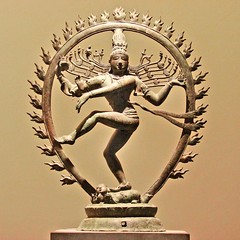
OK, Rumi, let's dance.

Photo Credit: Jean-Pierre Dalbera/ Flickr Creative Commons
We're fools whether we dance or not, so we might as well dance.
~Japanese proverb

Let the beauty you love be what you do. There are a thousand ways to kneel and kiss the earth.
~ Rumi

Nathan over at Dangerous Harvests just made his second anniversary post. Happy blogiversary, Nathan! To celebrate, he posted his first post from the blog. It isn't my anniversary, but I thought I'd go back and look at my first post anyway. Here's a piece of it (from November 2, 2008):
If yogis discovered the secret of happiness thousands of years ago, why do we now still live in a culture of so much suffering?! And to put it more personally, since this is to be my personal journey, why do I still suffer so much? Why do I forget to practice in my daily life, when I know that it will not only make me happier and healthier, but also decrease suffering in the lives of those around me?

In June, I started a Masters in International Education at the SIT Graduate Institute in Vermont. I chose the school because I believe the SIT philosophy is highly compatible with my attempts to increase the practice of yoga in my daily life. In formulating my learning plan, I stated as my second learning objective "Explore ways to bring my career into harmony with my yoga practice." In fact, this is one of the key reasons why I am doing this degree - to give myself the training and the tools to adjust my working life to facilitate my practice - and yes, cheesy cheesy, to do more good in the world.

It's interesting to look back on because I don't feel that way any more. It's not that I don't suffer, but that the quality of my suffering has changed. Back then, I was suffering in the dark. Now, I feel like I can at least suffer with the light on. I have a consistent daily practice, not only of yoga and meditation on the mat or cushion, but also taking these practices into my life and applying them to running, eating, working, and personal relationships. Through this, I've not only physically transformed but I've begun to shine the flashlight of mindfulness into all sorts of dark corners.

In the beginning, this blog was about bringing my career into alignment with my yoga practice. I had forgotten that. Back then, I was working a challenging administrative job and struggling to practice yoga in the workplace. I was reluctant to admit that I was struggling so much because it wasn't the right place for me to be. It was a job that worked with my strengths and which brought out all the worst in me, too. I suffered in many ways at that time: emotionally, physically, mentally, spiritually. The suffering had to get really bad before I was really willing to look at the forces that were holding me there and ask myself: Why? Why fight? Why not just let go?


I was clearly looking for the light switch, even then. I'd started my Masters program because I was already seeking. I wrote those things in my learning plan and started this blog for a good reason. I've even had a Rumi quote up on my computer sidebar, probably since before I started this blog: Let the beauty you love be what you do. It took me all this time to really see it, to look Rumi in the eyes and reply, Yes. OK. I know why you are here. Let's dance.

When I started shining that flashlight around, mostly what I saw was fear. When I looked more closely, I realized that fear is always worse than the thing I fear.  I know this is not a new concept, but the more I sit on my cushion in silence with my eyes closed, the more I have to make friends with it. I began to wonder if I ever had any other motivation for action in my life besides avoiding fear. I began to wonder what would happen if I did something for love. Would the world end? Would the boogieman in the corner come out and get me? Did it matter?

There's never any map for these journeys we take, or rather, I'd say there are many maps - the experiences of others who have taken their own journeys and lived to tell the tale - but they're cryptic and incomplete, and sometimes we flat out refuse to believe that they could really be telling us to leap off that cliff into the darkness. Over the past three years, I've been evolving. I feel like the same person, but when I look back to that first post, I know I am not. I'm teaching at Community College now, and it's scary and difficult and fulfilling. I just started Yoga Teacher Training this past weekend. I'm finally ready to take the necessary risks in order to make sure all the pieces of my life really fit. I've learned to feel gratitude for the fear and suffering, because I've realized that they were the map and directions. They were the flashlight. I'm ready, finally, to really love what I do.

Tuesday, May 25, 2010

Permanent Changes

I just finished presenting my Masters project at our final seminar. My project involved designing an innovative pre-college program for adult international students, based at an ESL school. I won't go into all the details, but I will say that it involves using yoga, meditation, breath awareness, and mindfulness to combat stress related to school and culture shock. Wow. When I thought of it, I thought someone should be doing this. Suddenly I am the one doing this. I am the perfect person to be doing this. My whole life has led me to it. Exciting, scary, amazing, surreal.

I was not nervous during the presentation. I felt mindful. After, many of the comments said that I had both a calm and engaging presence. I was deliberate and authentic. I spoke from the heart.

Recently, I heard my classroom presence described as "zen". Calm, soothing, zen. I've been hearing this a lot lately.

The thing is, I'm pretty sure I didn't hear these words being used to describe me a few short years ago. I'm pretty sure then it was things like intense and emotional and passionate that came out. OK, I guess I still am those things but also I have this new dimension, this calm woman with the soothing voice and the poise and the precise speech. Where did she come from?

What has changed? I meditate twice a day now. And so ~ she was in there all along.

Deep changes. Now I stay more connected to what is, cling a little less to myself. I am afraid less. I am upset less by change than I used to be. Not all the time, I am not saying I am anywhere yet, I am not saying I have this down. I am just saying ~ people seem to describe me differently than they used to.

As part of my research, I looked at Transformative Learning Theory, originally described by Jack Mezirow in 1978 (coincidentally the year of my birth) and which has been studied extensively ever since. This theory suggests that when we encounter a situation that does not fit with what we believe about the world, we are disoriented. This may inspire us to make a permanent and irreversible change in the way we see things, and this in turn will change our actions, our words, our relationships with others. This is not a surface change - it is a change to our beliefs, our values, our worldview at the deepest level.

And isn't this what happens on the yoga mat, on the meditation cushion, when we take our practice out into the world? Disorientation... and then maybe, something shifting inside. Something moving over and permanently making room. Making the heart a little more expansive.

I am told that for academic work, we must connect theory to practice and practice to theory. Practice. I once understood the practice of education and the practice of yoga to be different. Now I think I understand - it is all the same practice. My heart smiles.

Sunday, March 7, 2010

Accepting limitations

“Through practice, I’ve come to see that the deepest source of my misery is not wanting things to be the way they are. Not wanting myself to be the way I am. Not wanting the world to be the way it is. Not wanting others to be the way they are. Whenever I’m suffering, I find this ‘war with reality’ to be at the heart of the problem.” -- Stephen Cope

“These days, my practice is teaching me to embrace imperfection: to have compassion for all the ways things haven’t turned out as I planned, in my body and in my life – for the ways things keep falling apart, and failing, and breaking down. It’s less about fixing things, and more about learning to be present for exactly what is.” --Anne Cushman


Once again, I've been gone from this blog for a while. I've been practicing out in the world. I've been writing, but not about yoga. I've been going down different avenues, most of them very internal. Once again, I feel like it's time to come back here and see what there is to be said, explicitly, about practice.


Since the New Year, I've been practicing meditation and pranayama more intensely. I've been reading a lot about yoga philosophy and mindfulness in daily life, and my asana practice has dropped to the side. I've also started training for a marathon. As I've been increasing my weekly mileage, I've been exploring the meditative possibilities of running - how it feels to connect with the body and the breath, to use yogic practices like sending the breath into areas of discomfort and using mindfulness with mental habits such as fear of failure and the desire to give up.


Approximately three weeks ago, I started getting some minor nagging knee pain during runs. It was so negligible that I put it out of my mind and thought I just needed to stretch more and rest my legs. However, on February 22 I completed a 10-mile run and I ended it with severe pain in my knees which worsened over the course of the afternoon and evening. I soon realized that I had a serious overuse injury that was going to require an absolute halt to training until I could move pain free.


I was devastated. I had invested all my identity in my running and had come to rely on it for a sense of purpose and power in my life. At first, I wanted to give up on everything and crawl into bed and never come out. But then all the meditation practice I've been doing kicked in. Instead, I was determined to listen to my body until it spoke to me. I gathered as much information as I could about my condition, and I asked my knees what they needed. At first, they just wanted me to stop moving, but then as the pain subsided, I began to be able to identify specific areas of difficulty and how they were affected by the way I moved my body.


I held back. I watched all my thoughts and practiced letting them go, whatever came up: a sense of failure, a sense of desperation, a competitive urge. When my knees asked for it, I got on my yoga mat and discovered that my body knew which areas to work and stretch to give my knees the freedom of movement they required. Yesterday, I woke up and my body shouted, "RUN ME!" At first, I doubted it, but when I took to the road, I discovered that I could run 4 miles without pain. Not only that, but I was present in every step. I felt the impact of each movement; I felt the chain of energy of each impact with the road.


As soon as we are formed, our body begins to be affected by being in the world. Like the tree trunk in the picture accompanying this post, we are worn by the business of living and by our contact with those living around us. We are not perfect, we are not invincible, we cannot do whatever we want. We cannot take on everything. We like to think we can, but our bodies let us know... and if we don't listen, they shout louder. If we fight it, if we ignore our bodies, we end up in pain. What I have learned these past two weeks is that the pain is not here to punish us. The pain is our teacher. It is here to remind us to listen and to find what it is that we need. Come back into your body. Ask it what it has to tell you today. And then listen. Whether you like what it has to say or not.

Monday, May 25, 2009

Satya - To tell the whole truth and nothing but the truth

Recently, I've been thinking a lot about satya, or truthfulness, one of the five yamas (ethical restraints) proposed by Patanjali. The concept is deceptively simply - be truthful in your words and actions. But in reality, it is an extremely difficult precept to follow.

For one thing, satya comes into direct conflict with the restraint of ahimsa, or non-harming. The use of the word ahimsa is an interesting one. Yoga does not simply ask us to be kind to others, it asks us specifically to restrain from causing harm. That is a much broader and more difficult practice. When it comes to satya, the trick is to tell the truth without causing harm to others - or to ourselves. Another challenge is that satya includes not only our words, but also our actions. We must always act in such a way that our behavior expresses our true thoughts and intentions (and don't forget ahimsa.)

Perhaps the most difficult thing of all is the fact that so many of us spend so much time being dishonest with ourselves. It's very difficult to know if your words and actions are not truthful when you are not even consciously aware of your own truth, what you really think and feel in any given situation. For many of us, the fictional stories we tell ourselves about who we are and what we want have become such an integral part of the fabric of our being that we are unable to recognize the lies we tell on a daily basis. The tricky thing about truthfulness is that it refers to the absolute truth - so the embroidery and exaggeration that we may be used to using, all of the fish stories and half-truths and white lies that have become second nature to us - these too are not satya. Just because something closely resembles the truth does not make it true.

I admit it - lies perform some very important functions in my daily existence: creating my desired fictional sense of self, preventing hurt to myself and others, avoiding uncomfortable situations, etc. The thought of trying to unlearn these behaviors is pretty daunting. I'm relatively determined - but still, overwhelmed. For one thing, speaking the truth might mean that all of those lovely defense mechanisms would go away, leaving me vulnerable to those classic demons What Might Happen, and worse, What People Might Think. I'm a pretty private person (which you might not know from this blog, but blogging is not real life), and I'm also a little bit introverted by nature so the thought of speaking my truth on a daily basis is way up there with skydiving on my list of terrors. (I'm also pretty afraid of heights.) But I've done a pretty good job of doing things that terrify me, and I'm not totally ruling skydiving out of my future either. Speaking the truth to strangers is a pretty good practice.

An interesting system of speaking truthfully to others without causing harm is Marshall Rosenberg's Non-Violent Communication (NVC), which I think I've mentioned here before. I've dabbled in NVC and it's one of those practices that I believe in but have trouble implementing regularly in life. For one thing, it goes against our entire ingrained culture of expected communications. The idea is basically founded on the expression of universal and specific emotions which result from universal needs. It's a very non-judgmental way of communicating the truth without blame.

The tricky thing is that when the processes of lying, exaggeration, embellishment, and unauthentic action are ingrained, how do you become mindful of the process in order to stop it? I believe that some yogis will even take a vow of silence in order to facilitate the process of awareness of the thought patterns that lead to dishonest and/or harmful speech. Unfortunately my work will not exactly allow me to do this. I'm trying to just work with awareness, but it's a long slow process. I don't exactly have or easy answers on this one.

I'm half-Japanese and have a little Japanese cultural influence, and I think this is something that causes me particular challenges in this area. So much of Japanese culture is based on creating smooth and harmonious social relationships, and communication patterns tend to be very indirect. I've noticed that if someone asks me the right questions, I'm often able to speak truthfully, but if not, I have a tendency to leave the truth implied or completely unsaid. I've been accused of expecting others to read my mind, and there's probably some truth in that. I also sometimes act the way others want or expect me to, rather than in a truthful way. I've noticed that the result can be that my needs are not met in my relationships with the other people in my life or that the relationships are not completely authentic - and sometimes things build up to a point where the truth comes out suddenly in an unpleasant and hurtful way. I don't intend to mislead anyone ever; very often I am not even aware of the truth myself.

So this all sounds really awful - but it's honest. And don't get me wrong - I'm not beating myself up over it. I think it's a pretty common experience - and great practice. Adopting the practice of satya is like unravelling an enormous knot. Something that takes patience - but which I happen to be pretty good at. We'll see if the skill transfers. Like everything else, satya comes back to mindfulness, back to the breath, to the present moment, to tapping into instinct and figuring out what the truth even is.

Like living itself, satya takes a big dose of courage. I'm giving myself a big pat on the back for even trying. Maybe one of these lifetimes, I'll get it right.

Saturday, April 11, 2009

A Virtual Sangha?

To practice right mindfulness we need the right environment, and that environment is our Sangha. Without a Sangha, we are very weak. In a society where everyone is rushing, everyone is being carried away by their habit energies, practice is very difficult. That is why our Sangha is our salvation. The Sangha where everyone is practicing mindful walking, mindful speaking, mindful eating seems to be the only chance for us to succeed in ending the vicious cycle.

And what is the Sangha? The Sangha is a community of people who agree with each other that if we do not practice right mindfulness, we will lose all the beautiful things in our soul and all around us. People in the Sangha standing near us, practicing with us, support us so that we are not pulled away from the present moment."

-- Thich Nhat Hanh, from Friends on the Path: Living Spiritual Communities in A Lifetime of Peace edited by Jennifer Schwamm Willis (p. 280)


It is so important to have a community of people who support your practice. Waking up is painful - changing habits you have followed for your whole life is not easy. I fail more than I succeed; time and time again I lost track of the practice. I often long for more of a community to practice with, especially at work. I have friends who practice yoga and meditation, but few I see regularly. I go to yoga classes for the sense of community support, but don't see the other students outside of class, and most of the people I see during the day do not follow the same practices. I know that there are lots of yogis and meditators in San Diego, and that I can go out and find them. But my life is consumed by my work and my studies, and I have another year to go at least before I obtain my MA. It is all I can do just to get all the work done, but I am concerned by the fact that there will always be excuses like this and I really do feel like the more yoga there is in my life, the better I feel.

I don't think it is for everyone to drop everything and go live in an ashram or other practice community. I want to practice engagement in my work, not leave my work behind. Sometimes, I do question my career choice. I wonder if I shouldn't be teaching yoga. But I'm halfway through an expensive degree - and in fact, I'm excited about what I do. I still hope that International Education can contribute positively to the world.

And besides: I'm worried about the illusion behind the idea that changing my career will make my life better. I hear this too much in the world: If I was just doing something different, if I could just find Mr. Right, if I lived somewhere different, I would be happier. I'm suspicious of it. There's lots of stuff to work with, whatever I'm doing, and I suspect that the path will be much the same, no matter which fork I take.

So there's still the question of community - How do I find one? Do I need to? I'm not sure what the answers are, but I do know that the internet has brought an interesting dimension to this search. I hear a lot about the evils of the internet - and I'll be the first to admit that I spend way too much time on it, I allow the internet to bring me out of the present moment every day, to steal attention from the breath, to lull me out of reality and to dull my attention. But like any tool, the internet is not inherently evil, and one gift it has brought me is a kind of virtual sangha. Through this blog, I have discovered a wide-ranging blogging community of like-minded folks - and I thank you for reading, for commenting, for supporting my practice. I hope that I am supporting yours. In the absence of a warm, human, local community, the virtual sangha may be the next best thing.

Now here's the rub: blogging, reading blogs, and commenting is not really practice. Getting practice ideas from the internet is only useful if you follow it up with the actual practice. Talking about yoga and meditation is not at all the same as doing yoga and meditation. I would hate to quit the internet cold turkey - but I would like to learn how to use the internet more constructively and less as a distraction. I'm grateful for and excited about this community, but I'm curious about ways the internet can be a better tool to support my practice in the real world, to maximize the benefits and minimize the negative influence it brings to my life.

I'm putting it to the commmunity. Any ideas?

Sunday, November 9, 2008

Practicing at work

Awake at Work by Michael Carroll offers, as its subtitle puts it, "35 practical Buddhist principles for discovering clarity and balance in the midst of work's chaos". Sounds pretty good, right? Of all the things that go on in my life, work is when I feel the least yogic. So often at work, I find myself goaded into gossip and malice. I become frustrated and lose track of my center. I speak without thinking.

Carroll suggests that this is precisely the reason why work is the perfect environment to cultivate one's practice. Of his own working life, he says "The daily grind, the successes and failures, the hard work and stress, all gradually unfolded as a profound teaching. And central to that teaching was the realization that the spiritual path is nothing other than living our very life, fully and confidently, in the immediate moment... Work becomes our spiritual journey when our destination is no longer just becoming more successful or more wealthy or getting a paycheck, promotion, or job security, but when we also work to resolve a most fundamental question: Can we be at home in our lives - can we be open, honest, and at ease under all circumstances, moment by moment?" He goes on to acknowledge that work is frustrating for many people because it is something that we cannot control, that inevitably unfolds in its own way, messy and complicated. However, he suggests that if we stop treating work's problems as obstacles, but rather as invitations to wake up and pay attention, we can find "a profound sense of freedom and fulfillment in our jobs." I want that!

Carroll proposes a couple of practices for cultivating mindfulness at work. The first is to develop a regular mindfulness practice; he suggests daily sitting meditation practice. I have always had good intentions regarding the development of meditation practice; however, this hasn't ever turned into an actual practice for me. Life ~ as it likes to do ~ keeps reminding me. In my last post, I talked about how every moment is a good moment to begin again. It is clear to me that a regular meditation practice will help me to move forward with my practice at work. I even wrote it into my learning plan for school. I guess now's the time! We'll see how that goes.

The second practice is the contemplation of slogans, adapted by Carroll for the modern workplace from those used in lojong, a Tibetan Buddhist spiritual practice. I'll be referencing Carroll's slogans as I explore them in this blog and in my own life.

Again, we'll see how that goes... :-)

On and off the mat

Some of you may be familiar with The Holographic Universe in which Michael Talbot asserts that the Universe could be a hologram. Whether or not you buy into that idea, the ideas laid out in this book are engaging. One of the features of a hologram is that the entire image can be reconstructed from a fragment. Talbot gives examples of this in the real world; for example, the concept in acupuncture that the entire body can be mapped on the human ear.

I think that asana practice is holographic in this sense. From any moment of her practice on the mat, a yogi can reconstruct all the processes that take place in her daily life off the mat: all the patterns of self-talk, of holding and letting go, of ego, of resistance, of pushing too far, of denial, of connection, etc., etc. Not only that, but a breakthrough on the mat can translate into a breakthrough off the mat.

Like anything else in life, one can practice asana without being present. One can work without being present, eat without being present, talk without being present. The effects of this lack of mindfulness in asana practice can range from injury to simply not experiencing the maximum benefits of the poses. The same goes for not being present in life. Sometimes the effect is simply less joy, less appreciation, less benefit. Other times, you end up hurting yourself or someone else.
The effects of being present can be astounding. On the mat, the yogi can discover endless variations and directions in which to take the pose. There is always another level, a new discovery. Sometimes, on or off the mat, being present can result in absolute joy and peace where before there was discomfort.

Lately, with everything going on in my life, I've been finding it hard to be present. This morning, I brought my lack of mindfulness onto my yoga mat with me. It was hard to focus, hard to find the right alignment in poses I practice all the time with ease. It was time to back off and treat myself gently and kindly. This week too, I want to maintain this patience with myself. This has not been an easy fall for me, and sometimes I deserve not to push so hard. Today was a day for child's pose instead of the 100th downward facing dog. Today is also a day to nap a little and blog a little, even though my schoolwork needs to get done.

The beautiful thing about a yoga or meditation practice is that it is so incredibly forgiving and compassionate. In meditation or asana practice, the mind wanders and wanders and wanders. And yet, any moment is a good moment to begin again, fresh, from the beginning. In yoga and meditation and life, one is always beginning again. And that's OK. When you are present, the focus is not on the past, how you failed to hold attention, nor is it on the future, whether you will fail again. In fact, infinitely holding your attention is not the practice. Beginning again is the practice. We all begin again and again: it's never too late.

Tomorrow is Monday and at work, I will forget to be present. I can pretty much guarantee it. What a glorious opportunity to practice!