Showing posts with label leap of faith. Show all posts

Tuesday, March 22, 2011

OK, Rumi, let's dance.

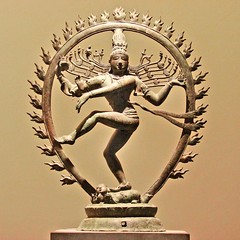
Photo Credit: Jean-Pierre Dalbera/ Flickr Creative Commons
We're fools whether we dance or not, so we might as well dance.
~Japanese proverb

Let the beauty you love be what you do. There are a thousand ways to kneel and kiss the earth.
~ Rumi

Nathan over at Dangerous Harvests just made his second anniversary post. Happy blogiversary, Nathan! To celebrate, he posted his first post from the blog. It isn't my anniversary, but I thought I'd go back and look at my first post anyway. Here's a piece of it (from November 2, 2008):
If yogis discovered the secret of happiness thousands of years ago, why do we now still live in a culture of so much suffering?! And to put it more personally, since this is to be my personal journey, why do I still suffer so much? Why do I forget to practice in my daily life, when I know that it will not only make me happier and healthier, but also decrease suffering in the lives of those around me?

In June, I started a Masters in International Education at the SIT Graduate Institute in Vermont. I chose the school because I believe the SIT philosophy is highly compatible with my attempts to increase the practice of yoga in my daily life. In formulating my learning plan, I stated as my second learning objective "Explore ways to bring my career into harmony with my yoga practice." In fact, this is one of the key reasons why I am doing this degree - to give myself the training and the tools to adjust my working life to facilitate my practice - and yes, cheesy cheesy, to do more good in the world.

It's interesting to look back on because I don't feel that way any more. It's not that I don't suffer, but that the quality of my suffering has changed. Back then, I was suffering in the dark. Now, I feel like I can at least suffer with the light on. I have a consistent daily practice, not only of yoga and meditation on the mat or cushion, but also taking these practices into my life and applying them to running, eating, working, and personal relationships. Through this, I've not only physically transformed but I've begun to shine the flashlight of mindfulness into all sorts of dark corners.

In the beginning, this blog was about bringing my career into alignment with my yoga practice. I had forgotten that. Back then, I was working a challenging administrative job and struggling to practice yoga in the workplace. I was reluctant to admit that I was struggling so much because it wasn't the right place for me to be. It was a job that worked with my strengths and which brought out all the worst in me, too. I suffered in many ways at that time: emotionally, physically, mentally, spiritually. The suffering had to get really bad before I was really willing to look at the forces that were holding me there and ask myself: Why? Why fight? Why not just let go?


I was clearly looking for the light switch, even then. I'd started my Masters program because I was already seeking. I wrote those things in my learning plan and started this blog for a good reason. I've even had a Rumi quote up on my computer sidebar, probably since before I started this blog: Let the beauty you love be what you do. It took me all this time to really see it, to look Rumi in the eyes and reply, Yes. OK. I know why you are here. Let's dance.

When I started shining that flashlight around, mostly what I saw was fear. When I looked more closely, I realized that fear is always worse than the thing I fear.  I know this is not a new concept, but the more I sit on my cushion in silence with my eyes closed, the more I have to make friends with it. I began to wonder if I ever had any other motivation for action in my life besides avoiding fear. I began to wonder what would happen if I did something for love. Would the world end? Would the boogieman in the corner come out and get me? Did it matter?

There's never any map for these journeys we take, or rather, I'd say there are many maps - the experiences of others who have taken their own journeys and lived to tell the tale - but they're cryptic and incomplete, and sometimes we flat out refuse to believe that they could really be telling us to leap off that cliff into the darkness. Over the past three years, I've been evolving. I feel like the same person, but when I look back to that first post, I know I am not. I'm teaching at Community College now, and it's scary and difficult and fulfilling. I just started Yoga Teacher Training this past weekend. I'm finally ready to take the necessary risks in order to make sure all the pieces of my life really fit. I've learned to feel gratitude for the fear and suffering, because I've realized that they were the map and directions. They were the flashlight. I'm ready, finally, to really love what I do.

Monday, July 27, 2009

Tremendous confidence


Life has taken me away from this blog for a while - which overall is a very good thing, since life is much more important than blogging! What brings me back is a mantra I've been considering recently, something that one of my teachers says: Have tremendous confidence that you can. She usually says this right before we do something the mind warns is impossible, like standing on our heads. I love this mantra because often confidence (or lack thereof) is the only thing standing between me and what I want. I love it because the phrase tremendous confidence acknowledges how challenging it can be to believe, how much effort is needed to act on faith. I love it because I can feel the difference it makes in my body, in my mind, in my breath.

Recently, I viewed myself in a video from Jason Crandell's workshop at the Ojai Yoga Crib in 2007:


It's amazing to watch myself practice as I was two years ago. Almost from the beginning, I've loved Vrksasana (Tree Pose) and have felt at home in it. Ardha Chandrasana (Half Moon Pose) was a whole different story. Around the time of this video, I was referring to this pose as "my nemesis." The video features me falling in Ardha Chandrasana... on both sides. I'm struck by a couple of things when I see this video. First of all, by how different I now feel in my body when I do Ardha Chandrasana - sensations of ease, grace, lightness. And secondly, by the fact that in this video, it is visibly clear that I had learned to take myself into a posture in which I knew I would probably fall, to practice with joy in the face of great challenge. But I had not yet learned to have tremendous confidence that I could do the pose without falling, in spite of past history and rational or irrational fears.

I feel myself sometimes at this same crossroads in my life off the mat: willing to face challenge with a smile, but at the same time, lacking the confidence to just act without fear. In trying to break old patterns, whether it's falling in Ardha Chandrasana or holding your truth back in a relationship, sometimes you can spend too much time examining the pattern - and the more you look at it, the more it repeats itself. Sometimes the key might be to forget about the pattern, forget that you have ever been in a similar situation before, tap into that tremendous confidence, and step into the pose. With grace. And breath. Breath never hurts either.

When I see myself falling in 2007 and then feel myself lifting into Ardha Chandrasana in 2009, it gives me hope. Maybe the things that seem challenging now in my life will be second nature to me in two years. On second thoughts, I'll drop the "maybe." The things that seem challenging now in my life will be second nature to me in two years. I have tremendous confidence that I can.

Friday, May 29, 2009

Making decisions

"Let yourself be silently drawn by the stronger pull of what you really love."
-- Rumi

So this theme has been recurring in my life about the decision-making process. It's an impossible process really; every issue has multiple sides and there's always so much unknown. In the end, there's nothing for it but to turn inward and see what is in the heart, to commit to a choice and the consequences of that choice, no matter what those may be.

I'm someone who could agonize over something as unimportant as a menu for hours if I thought people would put up with it. So often, when asked by my dining companions what I'm going to order I'll say, "I'll see what comes out of my mouth." It's not unusual that what I ask for in that moment is not at all the dish I thought I had decided on.

It's odd that a menu can cause me so much anguish, but at work on a daily basis I make quick, sometimes ruthless decisions without hardly a thought. That's not to say I take workplace decisions lightly, but I think that in that context so many of the contributing factors are simply ingrained; I have a wealth of experience that gives me a pretty good idea who these decisions are going to turn out. Add to that the fact that it is my job, my responsibility, to make these calls. People are relying on me. A similar force to that which makes me finally choose a dish from the menu when the server comes to the table, the need to follow procedure and hold up my end of the deal.

In this article from Seeker Magazine, Susan Kramer talks about the idea that yoga practice can help us become aware of tension in our bodies as we make a decision. Paying attention to the sensations in the torso can help you to become aware of when considering a course of action brings increased stress and when an alternative creates a sense of relaxation. In other words, the physical body may communicate to us when we are making a decision that goes against our instincts. It's good to have tools!

I think there is more to this than just tension in the body, but maybe I'm wrong. For me, the hardest decisions are those that could hurt other people and those which have a lot of unknown elements, as well as those where the results don't really matter (such as ordering a meal). That's probably pretty typical. Sometimes I can get paralyzed in these situations, completely bogged down in a state of inaction. All options generate tension. But yoga offers us a solution: get quiet, connect with the breath, turn inward... and then act. (Yes, Erich, I hear you. "Googling the Internet of Infinite Mind" again.)

I've said here before that I believe what happens on the mat is just practice for what happens off the mat, and this is another example. If you have a home practice and you create your own sequences, there's only one way to decide what pose to flow into next, how long to hold it, and what adjustments to make. You guessed it. Get quiet, connect with the breath, turn inward... and move. From the core, from the heart, from the energy within. I think any creative process is like this: music, writing, art. You might know a lot about the mechanics of yoga, music, writing or painting - but when it comes down to the art of it, decisions are not made with the head but rather with the heart, or maybe by a higher power. Sometimes it's as though the poems or music or asanas write themselves.

If you are not used to listening to your instincts, it can be difficult to trust yourself to make decisions from the heart. If your logical mind is arguing one way and your heart another, it takes a great deal of faith to go with your instincts. This reminds me of something I was told when I was about 15 (by a boy I had a crush on incidentally - you'll see why.) He said, "If you flip a coin and then do the opposite of what it tells you, you'll know that's what you really wanted to do all along."

Flip a coin. And then do what you really wanted to do all along. You know what that is.

Wednesday, February 4, 2009

Man up a tree

Recently, I discovered this blog, in which there has been a lot recently about a zen koan about a man up a tree. The Dalai Grandma outlines the story like this:

The basic idea is, You are hanging from a tree by your mouth. You can't reach a branch with your hands or feet. Someone comes by and asks you to tell him about Zen. You have a dilemma: if you speak, you fall and die. If you don't, you are abandoning your responsibility to others. What do you do?
The man's dilemma spoke to me too, so I have been following the blog carefully. The Dalai Grandma's final post on the koan is here. The part that caught my attention was this in particular:

The thought came as an image while I was carefully steering through the parking lot at the health club, where people seemed likely today to get in wrecks. I visualized a man hanging from a tree, hanging by his mouth, remember, in his dilemma, and then I saw the grass just a few inches under him. Aha, I thought. The koan cleverly omits to say how high in the tree he is. So, no problem. Just let go and fall out of the dilemma. Land on the nice soft grass. Sometimes we make our dilemma so convoluted that this is the only way to handle it.

She also makes reference to a John Burroughs quote: leap and the net will appear.

In addition to the obvious, the leap of faith I talked about in a
previous post, this whole recurring theme has really made me think about how I tend to complicate everything, trying to make everything mean something. Sometimes I get so caught up in it all that it takes the mental equivalent of a slap in the face to wake me up.

Buddhist teacher
Pema Chodron talks about this in her book Start Where You Are.

...interruptions themselves - surprises, unexpected events, bolts out of the blue - can awaken us to the experience of both absolute and relative bodhichitta, to the open, spacious quality of our minds and the warmth of our hearts.

This is the slogan about surprises as gifts. These surprises can be pleasant or unpleasant; the main point is that they can stop our minds. You're walking along and a snowball hits you on the side of your head. It stops your mind. (p. 78)


The surprise that can wake you up can be something very small. For example, recently I was carrying on at length about something in my own mind when a friend said to me, "Look the situation is very simple" and proceeded to summarize my situation in a couple of sentences. His words stopped me like that snowball in the side of my head. At first, I was offended by the logic. No, my situation is not simple, I protested to myself. But the honest truth was that my situation was simple, I just didn't want to see it. Like in the Dalai Grandma's interpretation of the Man in the Tree koan, I could just let go of the branch and fall to the ground.

Sometimes we need friends who can wake us up like this. People who see the world in different terms and are able to shake you out of your habitual way of seeing. This week I am trying to see the world as simple and logical. To accept things as they are, and not to make things mean more than they do. I am also trying to find the patience to sit with my dilemmas, as one sits with a koan. And to embrace the surprises, even the unpleasant ones.

And to trust that the universe will give me what I need. Including, when I'm ready to leap, a net.

Wednesday, January 28, 2009

The leap of faith

Saul David Raye is a yogi with a beautiful, peaceful and compassionate soul. The few classes I have been privileged to take with him have always been exactly what I needed at the time. His newsletter arrived in my inbox today, and once again, really spoke to me:

"I recently read somewhere a wonderful quote that really touched me. I have tried to relocate the source but have not been able to as of yet. It was something like this "sometimes the only next possible step is a leap of faith!" In my own life this seems to be all that is happening; whatever I know, whatever I have believed to be true is no longer working. When I make choices from my heart, from the inner wisdom and creativity that is in each of us at every moment, the results are amazing. The energy we set in motion when we are resonating at the frequency of our hearts is truly miraculous. Blessings along the path you walk...and to the leap of faith that you are being asked to make in your life right now!"
How did he know? :) My life, too, is demanding of me a leap of faith. I feel myself in one of those moments that define a life and cause it to branch off in a new direction, if I have the courage to make the right choice from the heart.

Once again, there is a parallel on the mat. From my asana practice, I am reminded of the lessons of Urdhva Dhanurasana, known in English as wheel pose or upward-facing bow. This pose for me brings a feeling of joy, even elation, and a rush of energy. Indeed, one of its uses can be to reduce depression. Being comfortable in the pose can feel incredibly uplifting. However, the pose is a challenging one, and has posed some particular difficulties because of my ongoing wrist issues, and because it is a fairly deep backbend. It requires a good warm up, and some strength and flexibility.

However, the main challenge of Urdhva Dhanurasana for me has been mental. Coming into the pose from a supine position requires an initial push to come to the crown of the head, and another push to straighten the arms. Although I have done this pose successfully many times, and it is one of my very favorite poses to do, I have also many times failed to find the strength - or perhaps the commitment - to come all the way up into the pose. Every time before the initial push I feel a great sense of apprehension and fear. It is very difficult for me to commit my energy and breath to lifting into the backbend. I have been doing this pose for several years, but it still requires each time a leap of faith to attempt it.

And the rewards are great. In this pose, with the heart open to the sky, the spirit soars.

I feel myself, in my life off the mat, lying supine, placing my hands on the floor above the shoulders. Taking some deep breaths.

May we all have the courage to take the only possible next step.

Namaste.