Showing posts with label suffering. Show all posts

Tuesday, March 22, 2011

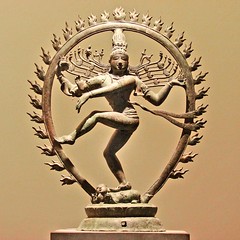
OK, Rumi, let's dance.

Photo Credit: Jean-Pierre Dalbera/ Flickr Creative Commons
We're fools whether we dance or not, so we might as well dance.
~Japanese proverb

Let the beauty you love be what you do. There are a thousand ways to kneel and kiss the earth.
~ Rumi

Nathan over at Dangerous Harvests just made his second anniversary post. Happy blogiversary, Nathan! To celebrate, he posted his first post from the blog. It isn't my anniversary, but I thought I'd go back and look at my first post anyway. Here's a piece of it (from November 2, 2008):
If yogis discovered the secret of happiness thousands of years ago, why do we now still live in a culture of so much suffering?! And to put it more personally, since this is to be my personal journey, why do I still suffer so much? Why do I forget to practice in my daily life, when I know that it will not only make me happier and healthier, but also decrease suffering in the lives of those around me?

In June, I started a Masters in International Education at the SIT Graduate Institute in Vermont. I chose the school because I believe the SIT philosophy is highly compatible with my attempts to increase the practice of yoga in my daily life. In formulating my learning plan, I stated as my second learning objective "Explore ways to bring my career into harmony with my yoga practice." In fact, this is one of the key reasons why I am doing this degree - to give myself the training and the tools to adjust my working life to facilitate my practice - and yes, cheesy cheesy, to do more good in the world.

It's interesting to look back on because I don't feel that way any more. It's not that I don't suffer, but that the quality of my suffering has changed. Back then, I was suffering in the dark. Now, I feel like I can at least suffer with the light on. I have a consistent daily practice, not only of yoga and meditation on the mat or cushion, but also taking these practices into my life and applying them to running, eating, working, and personal relationships. Through this, I've not only physically transformed but I've begun to shine the flashlight of mindfulness into all sorts of dark corners.

In the beginning, this blog was about bringing my career into alignment with my yoga practice. I had forgotten that. Back then, I was working a challenging administrative job and struggling to practice yoga in the workplace. I was reluctant to admit that I was struggling so much because it wasn't the right place for me to be. It was a job that worked with my strengths and which brought out all the worst in me, too. I suffered in many ways at that time: emotionally, physically, mentally, spiritually. The suffering had to get really bad before I was really willing to look at the forces that were holding me there and ask myself: Why? Why fight? Why not just let go?


I was clearly looking for the light switch, even then. I'd started my Masters program because I was already seeking. I wrote those things in my learning plan and started this blog for a good reason. I've even had a Rumi quote up on my computer sidebar, probably since before I started this blog: Let the beauty you love be what you do. It took me all this time to really see it, to look Rumi in the eyes and reply, Yes. OK. I know why you are here. Let's dance.

When I started shining that flashlight around, mostly what I saw was fear. When I looked more closely, I realized that fear is always worse than the thing I fear.  I know this is not a new concept, but the more I sit on my cushion in silence with my eyes closed, the more I have to make friends with it. I began to wonder if I ever had any other motivation for action in my life besides avoiding fear. I began to wonder what would happen if I did something for love. Would the world end? Would the boogieman in the corner come out and get me? Did it matter?

There's never any map for these journeys we take, or rather, I'd say there are many maps - the experiences of others who have taken their own journeys and lived to tell the tale - but they're cryptic and incomplete, and sometimes we flat out refuse to believe that they could really be telling us to leap off that cliff into the darkness. Over the past three years, I've been evolving. I feel like the same person, but when I look back to that first post, I know I am not. I'm teaching at Community College now, and it's scary and difficult and fulfilling. I just started Yoga Teacher Training this past weekend. I'm finally ready to take the necessary risks in order to make sure all the pieces of my life really fit. I've learned to feel gratitude for the fear and suffering, because I've realized that they were the map and directions. They were the flashlight. I'm ready, finally, to really love what I do.

Thursday, January 27, 2011

Protect the state of no-intent

Photo credit: mollyollyoxenfree/Flickr Creative Commons

Yesterday I came across an article called "What Happened to Downtime? The Extinction of Deep Thinking and Sacred Space". The author, Scott Belsky, writes about how we are losing our moments of isolation and distraction-free thought. We are forgetting how to unplug and connect in with something else: ourselves, our thoughts, our intuition, and our dreams. It's an excellent article and I'll let it speak for itself. What's interesting to me is that Patanjali saw this coming.

There's no arguing with the fact that the phenomenon Belsky addresses in his article is visible all around us. It's interesting that the very word connected has come to refer to being online - a state I would argue is actually in many cases disconnection from what is, from the self and the Self. I, too, am concerned - even frightened - about the changes that are happening in our culture as we become more and more accustomed to being constantly plugged in, available, and awash in "information". 'm certainly not suggesting that we should all unplug everything and go live in an isolated mountain cave for the next ten years. I have already written here about some of the benefits I think can be found on the internet. The trick (as is so often true) is finding the balance.

In his article, Belsky astutely notes that the instincts that lead us to seek "constant connection" have been part of human nature since the beginning. I can see how, in the dark jungle nights, the drive to find and connect with others was a matter of life and death. But now, does our attachment to constant positive feedback on our Facebook posts or having large numbers of blog followers really serve us? Does it serve our community? Does it make us happy? I think the answer to these questions is clearly no.

The Apple i-Tunes site boasts "everything you need to be entertained", and yet like the cravings we had in the old days, this hunger for amusement and distraction never stops. Patanjali certainly did not have any Apple devices beginning with "i", but he did talk about the causes of suffering (the kleshas, sometimes translated as afflictions or obstacles) in the Yoga Sutras. In Chip Hartranft's translation (which I found in Stephen Cope's The Wisdom of Yoga), they are "not seeing things as they are, the sense of 'I,' attachment, aversion, and clinging to life." I plead guilty.

Really, it is a long chain reaction of the kleshas that leads us to give up what Belsky calls "our sacred space." On the surface, this behavior looks most like attachment, raga in Sanskrit, but I think if I had to pick just one klesha that drives me towards a state of constant connection, it would be the flip side of the coin: dvesha, aversion. Belsky saw this too: "Space is scary," he says. What myriad of fears are we fleeing from online? With this constant flow of information, what evils do we plan to avert? What demons do we seek domination over? In our online communities, are we still seeking to drive out our fear of what waits in the dark jungle?

Bless Patanjali (or whoever wrote the Yoga Sutras). With great compassion, he did not just leave us with the knowledge of our afflictions, but with concrete tools to overcome them: the practice of yoga. "Suffering that has not yet arisen can be prevented," he tells us. "The preventable cause of all this suffering is the apparent indivisibility of pure awareness and what it regards... When the components of yoga are practiced, impurities dwindle; then the light of understanding can shine forth, illuminating the way to discriminative awareness."

Although it's hard to find a definitive statistic, I think it's safe to say that millions of Americans are now taking up yoga. I don't think this is a coincidence. We instinctively know something is missing from our lives, even if we don't know what it is. Whether we know it or not, yoga is providing many of us with avenues to many of Belsky's suggestions for preserving sacred space. Even if you never chant "om" or read the sutras, even if you just go to class to sweat, the truth is that yoga classes everywhere are providing people with sacred space to unplug and perhaps turn off some of those persistent, nagging thoughts and worries, maybe even to become more self-aware... and if we're lucky, to fall into that increasingly elusive "state of no-intent". And perhaps this is one of the things that draws us, almost inexplicably sometimes, back to our mats again and again and again.

Monday, April 13, 2009

Healing Those Who Are Broken

At the conclusion of this evening's yoga class, my teacher Joshua Graner told us that he has been doing some work with the US military teaching yoga to veterans and soldiers with PTSD. Problems with PTSD and other disorders have reached crisis levels, and the military, not knowing what else to do, is paying for clinical studies using yoga, acupuncture and other treatments from Eastern medical traditions. Click here for a recent article on the subject. While the writer is skeptical about some of the treatments the military is trying (I'm trying not to be offended by his use of the term "wild-sounding" to refer to some of the techniques authorized), he does support yoga for vets. Click here for a Yoga Journal article on yoga as treatment for PTSD. Joshua is a great person to be doing this work. Not only is he an amazing teacher and healer, but he started his career as an army medic. I'm excited to see the military taking these steps to find healing for those who have been traumatized by battle - maybe some day we will actually be teaching peace, love, and mindfulness to prevent war itself.

Friday, April 3, 2009

More on suffering - I get it!

OK, I wrote that last post and I still didn't feel like I was "getting" what I was writing about. I was writing about my pain and what causes it, but I wasn't really understanding how to work with it. I guess I was mostly writing about my faith that the pain was there to help me wake up because lots of yogis say so!

I'm still reading Stephen Cope, and this morning I read something that helped me "get" it.
It is important to understand that in the yogic view, the phenomenal world is not seen in itself as unreal. It is just seen as the tip of the iceburg. Our delusion is not that we think of the gross phenomenal world as real, but that we miss the hidden depths that underlie it. We miss its interiority. And thereby, we reamin oblivious of our deep and subtle connectedness to the whole realm of mind and matter.

... The goal... is not to disengage from the phenomenal world, but to turn to embrace it more and more deeply - to discover its hidden depths. And in order to do that, paradoxicaly, we do not reject the vicissitudes of the embodied life. We do not reject suffering. Rather, we turn and go thorugh the doorway of suffering. We turn to embrace our neuroses, our conflicts, our difficult bodies and minds, and we let them be the bridge to a fuller life. Our task is not to free ourselves from the world, but to fully embrace the world - to embrace the real.

OK, now that is something I can work with. I've experienced this paradox before - when you open yourself to the pain, it diminishes. Over the past couple of weeks, I've actually been admitting to people - and most of all, to myself - that I'm in pain: talking about it, exposing it to the air, experiencing it fully and seeing how it felt. Today, for the first time in ages, I feel like myself again.

Aha! It's interesting to me that I used a phrase at the end of my last post about "the path opening inwards" but I only just realized what I meant. The yoga was there, in my heart, all along.

Wednesday, April 1, 2009

Suffering

He who suffers much will know much.
-- Greek Proverb

The most authentic thing about us is our capacity to create, to overcome, to endure, to transform, to love and to be greater than our suffering.
-- Ben Okri

I've been sitting on this blog post for a long time, trying to find my way into it. It's hard to write about suffering, but I've experienced so much loss and change in the past year that it's getting so I can't write about anything else. Yoga philosophy refers to five kleshas, or afflictions that cause our suffering. This article is a discussion of the kleshas in the context of difficult losses, including suggestions for practices that work with the kleshas. In it, Bo Forbes provides the following useful description:

AVIDYA: The inability to see things for what they are; this causes you to mistake transient, ego-related matters for permanent, soul-related ones.
ASMITA: The tendency to overidentify with your ego; this keeps you from connecting with your soul.
RAGA: The flame of desire that causes addiction to pleasure; this discourages you from leaving your comfort zone for more evolved territory.
DVESHA: The aversion to pain; this creates a quicksand-like cycle of misery and self-hatred that sucks you under and suffocates your will to evolve.
ABHINIVESHA: The fear of death or a clinging to life; this dilutes your focus and interferes with your ability to experience the spiritual freedom that is the goal of yoga.

I've been reading Stephen Cope's book Yoga and the Quest for the True Self. In it, Cope describes four erroneous beliefs that underlie the delusion of the kleshas (p. 64):

  1. The belief in the permanence of objects
  2. The belief in the ultimate reality of the body
  3. The belief that our state of suffering is really happiness
  4. The belief that our bodies, minds and feelings are our true Self

So here we are again: loss shatters our belief in permanence and forces us to examine our delusions. It awakens us to the nature of our suffering and drives us in the search to realize the full potential of our being. Cope suggests that pain, loss, and disappointment can be key motivators in leading people to release their attachments to past, future and sense of self, and to progress in their spiritual practice.

He also quotes Bhagwan S. Rajneesh's commentary on the Yoga Sutras:

Yoga means that now there is no hope, now there is no future... Total despair is needed... A moment comes to every human being when he feels total hopelessness. Absolute meaninglessness happens to him. When he becomes aware that whatsoever he is doing is useless, wheresoever he is going, he is going to nowhere, all life is meaningless - suddenly hopes drop, future drops, and for the first time you are in tune with the present, for the first time you are face to face with reality... When you are not moving into the future, not moving into the past, then you start moving within yourself - because your being is here and now. You are present here and now.
You can enter this reality.

So with each disappointment, with each departed friend, with the end of love, with each death, I am trying to find my way into yoga, into the here and now. I am suffering, but I feel the path opening inward and I have a lot of faith.

Saturday, March 7, 2009

Compassion starts with yourself

If your compassion does not include yourself, it is incomplete.
-- Jack Kornfield

Sometimes I write things here just to remind myself of what I know but have forgotten. Practicing loving kindness towards myself is a big one. I'm quite sure that babies don't lie there and say to themselves, "Oh no, I wet my pants again. I am a horrible person!" So when does all this negative self-talk start, and where does it come from?

Yesterday I taught a teacher training workshop on classroom management. If you talk to teachers about their problem students and the issues that come up in their classrooms again and again, the emotions that come up can be powerful. As a teacher, student after student, year after year, is pushing your buttons. That one cell phone user is carrying the baggage of all previous in-class cell phone users. No wonder it is a high burnout profession! We all need therapy.

I guess any job is the same though. As a manager, I catch myself reacting inappropriately and all out of proportion because of that proverbial last straw. Because over the years, I've heard the same thing again and again so many times that I've lost my ability to see it for what it is. The student standing in front of me has no idea that he is the 300th student to wait until after the deadline to ask to change classes, but I react as though this particular student has done this 300 times. And then, I beat myself up for it. I'm angry at this student, therefore I'm a horrible person. Thus begins the self-flagellation.

In the workshop, we discussed the myth that teachers are not human. Sometimes we complain about the lack of empathy others show towards us. Students often seem oblivious to the fact that we might have our own concerns. We might be sick or heartbroken, we might be waiting for the results of serious medical tests or have a family member who has just passed away. We may suffer from insomnia or have debts we can't pay. But if we don't deliver impeccable service at every moment, we become a Bad Teacher.

It's easy to blame the student for this state of affairs, but the fact of the matter is that things are rarely one person's fault. I think that we - teachers, managers, professionals - often perpetuate the myth that we are not human. We present the hardened, professional, infallible front. We hide our weakness, afraid to be culled from the herd and put out of our misery. Because of this, we might think we are the only ones having this particular problem. We might start to think that we are less than human!

The practice of yoga is very forgiving. We all suffer and we all contribute to the suffering of others - we are not perfect! However, we have a choice, something that can be learned: we can have compassion for the imperfections of ourselves and others. I'm not saying this is easy. There's a reason why it's called practice. Sometimes, when I am gentle with myself and open my heart to my own suffering, I learn that situations are not as bad as I imagined them to be!

I encouraged the teachers to try a practice that I myself have been working on. Whenever tension arises, stop and ask yourself why. Why does this student make me so angry? What are my issues surrounding this situation? And then Why is the student acting the way he is? What is really going on? Marshall Rosenberg's system of Non-Violent Communication has a lot to say about how this kind of thinking, considering universal needs and how they contribute to emotions, can remove tension and build peace.

When I remember this practice (which is only some of the time), I find that the tension in the situation usually goes away. At best, there are these moments of insight and connection that take the breath away. At worst, the problem simply becomes a non-issue. Either way, everybody wins. I don't think this practice is possible unless we can learn to see ourselves kindly and with great compassion. When I can fully experience my own suffering with tenderness, I am filled with compassion for all other beings who are also suffering.

To quote Saul David Raye's opening words in a workshop I took with him at the Ojai Yoga Crib in 2007:
It is not easy being a divine soul in a body on Planet Earth in the year 2007.

Have compassion for yourself. It is difficult exisiting the way we do. Open your heart, see yourself and let yourself be seen.

Namaste, friends. The divine in me sees the divine in you.

Saturday, February 21, 2009

Guest House


This being human is a guest house.

Every morning a new arrival.


A joy, a depression, a meanness,

some momentary awareness comes

as an unexpected visitor.


Welcome and entertain them all!

Even if they are a crowd of sorrows,

who violently sweep your house

empty of its furniture,

still treat each guest honorably.

He may be clearing you out

for some new delight.


The dark thought, the shame, the malice,

meet them at the door laughing,

and invite them in.


Be grateful for whoever comes,

because each has been sent

as a guide from beyond.


-- Rumi

Monday, February 16, 2009

Impermanence

If we are not empty, we become a block of matter. We cannot breathe, we cannot think. To be empty means to be alive, to breathe in and to breathe out. We cannot be alive if we are not empty. Emptiness is impermanence, it is change. We should not complain about impermanence, because without impermanence, nothing is possible.
-- Thich Nhat Hanh


The Buddha's Five Remembrances

I am of the nature to grow old. There is no way to escape growing old.

I am of the nature to have ill health. There is no way to escape ill health.

I am of the nature to die. There is no way to escape death.

All that is dear to me and everyone I love are of the nature to change. There is no way to escape being separated from them.

My actions are my only true belongings. I cannot escape the consequences of my actions. My actions are the ground upon which I stand.

Oddly enough, watching Planet Earth makes me think about impermanence. The life that animals live on this earth can be brutal, and yet they seem peaceful. For us humans, living so close to death is terrifying. We spend our lives trying to deny change, illness and death. For many animals, brushes with death are a daily occurrence and yet they seem to accept them in a way we have not. Perhaps in distancing ourselves from death, we have done the human race a disservice. I'm not sure. It is difficult to judge without being able to get inside an animal's head somehow.

Talking with a friend recently about the death of someone she knew, I thought of the five remembrances (above). We spend much of our time putting these five things out of our mind. This is the root of all of our grief, the realization that our illusion of permanence is just that, an illusion, a mere fairy tale. I will probably spend the rest of my life trying to come to terms with these five things. This is heavy stuff. You can't just snap your fingers and be OK with it.

Shortly after my long-term relationship ended last fall, I took a workshop with Laura Tyree at the Ojai Yoga Crib. The theme of last year's Crib was the Queen of Hearts "GROW". How appropriate for me. The Crib is always appropriate, always exactly what I need. The universe is an amazing place.

Laura asked me two questions about my break-up: (1) What good has come of it, what have I learned from it? It has deepened my practice, and (2) What do I fear? Loneliness. Then she said, "When you feel that loneliness, turn into it. It is a divine loneliness. We are all seeking God."

Hmmm... I take "God" in a non-denominational way here to mean universality, the interconnectedness of all beings in this universe. And indeed, perhaps this is what we are all seeking. I have been thinking about Laura's words a lot, about how if you sink into the loneliness and stay present in it, you might find what it is that connects all of us. You might find the essence of what it means to be truly alive.

As I am making my way towards the other side of grief, it occurs to me that Thich Nhat Hanh is right (as usual), in his gently humorous way. I love this line: "We should not complain about impermanence, because without impermanence, nothing is possible." Without old age, illness, death, loss and change, nothing is possible. I am trying to sit with this knowledge, over and over. I am considering seeking out the loneliness and dancing with it, just to see what happens.

Sunday, February 8, 2009

Sloth

I had breakfast with a friend this morning and we were discussing our yoga practices and how we have both been practicing less than we would like. This is something that happens to me again and again. The asana practice, and also the other limbs of yoga, contribute positively to my life; I feel well in every way when I am practicing regularly. And yet... And yet, over and over in my life, there are times when I fall out of practice, when I stop practicing asana and meditation and pranayama, when I stop living consciously in the world.

The outcome of this lack of practice is always negative, not only for myself but for those around me. Frankly, when I am not practicing, I don't much like the person I become. I am haunted by ghosts of depression, anger and impatience. I treat others without compassion. I treat myself without compassion. I lack energy and joy in my daily life.

So the big question is: why, if I understand that my life is better in every way when I practice, do I ever stop?! My friend had some different insights into why this is the case in her life. In my case, I think it is most simply defined as sloth. My use of this term in the context of yoga practice is borrowed from Donna Farhi's
Bringing Yoga to Life. She describes this problem as follows:


The sloth is a bearlike creature giving to hanging upside down and moving so slowly that algae gives its brown coat a green tinge. [see image] Of the nine obstacles to the yogic path listed in the Yoga-Sutra, four can be attributed in some way to the effects of dullness, laziness, and inertia. Sloth makes it almost impossible to establish a firm ground for practice, and even if we are able to do so, sloth may prevent us from sustaining any ground we have gained. Most of us have a sense of what's good for us. This knowledge of the medicine we need bypasses the central dilemma: How are we going to get to the medicine cabinet? (pg. 163)
Of course, spiritual seekers of many faiths have been aware of the danger of sloth for a very long time. It is one of the seven deadly sins; Thomas Aquinas described it as "sluggishness of the mind which neglects to begin good... [it] is evil in its effect, if it so oppresses man as to draw him away entirely from good deeds." What is this sense of inertia that causes us to spend our energy unwisely and keeps us from pursuing a path of joy and good deeds? And how do we combat it?

Farhi suggests that a common solution in many traditions is the
contemplation of death. Awareness that our lives could end at any moment can help to open the heart and connect with life fully. It is the lack of awareness of our interconnectedness that allows us to live our lives carelessly and without attention to the practice. If we can realize that all this will one day pass, every moment becomes a opportunity to connect with what is eternal and precious. If we can honestly consider the reality of our own death, we will be forced to consider what is truly important, what gives meaning to our lives here on earth, and what leads us to happiness.

This practice sounds deceptively easy. It isn't. For whatever reason, I persist over and over in cutting myself off from joy. It is very easy to sit here in front of my computer and type these words of commitment, very hard to interrupt my habitual numbness and teach myself to be present. Having a community helps, and this is why I spend the money to go to yoga class or attend conferences, to find this inspiration. And this is why I am writing this blog.


In the yoga sutras, Patanjali says that "The wise see suffering in all experience... But suffering that has not yet arisen can be prevented. The preventable cause of all this suffering is the apparent indivisibility of pure awareness and what it regards" (2.15- 2.17). This is good news: future suffering can be prevented, and there is a way to do this, there are specific practices we can follow (yoga!). We can detach ourselves from our suffering and from the material world, realize that all of that is not who we are, and abide in pure awareness.

And yet here I go again, journeying through the world, grasping so fiercely at everything and perpetuating my own suffering - and when I suffer, I contribute to the suffering of others. Trying to find a path that will allow me to maintain awareness, so that I can let the world go with each exhale. Beginning this practice, again and again. I don't think I have the answers to the question of what causes sloth and how to overcome it, but I am willing to listen to any suggestions I can find.

Farhi has some parting words of wisdom:

When inertia and joylessness is our primary coloring, it is helpful to envisage some moment in our life when we felt infused with vitality and happiness, even if all we can conjure up is a single instant... Vividly contemplate the details of this experience... Then, as you consider your present situation, allow a creative solution to suggest itself to you.

Yoga teaches us that the way to joy is through joy. When we get a taste of this delightful state of equanimity, there is really nothing left to choose. When we are wedded to life it will seem ridiculous to use our energies for anything but strengthening that marriage. When we make a commitment to this inner relationship, life chooses us and we become instruments for fulfilling its purpose. (pg. 174)
Amen.

Tuesday, December 2, 2008

Gateway to Compassion

I had an interesting article in my inbox this morning. Its theme is related, I think, to some issues I have written about here before. To loosely paraphrase, it talks about valuing and fully experiencing your own feelings as a gateway to compassion. I think this is a nice counterpart to the question of aparigraha, letting go. Paradoxically, it is sometimes harder to let our feelings go because we repress them and refuse to fully experience them, or because we belittle them and somehow do not think we have the right to feel so strongly about what may seem to be relatively minor issues. However, many yogis have found - and this holds true in my experience as well - that by fully experiencing a negative emotion without repression or judgment, that emotion then lessens and becomes more bearable. In addition, remaining open and compassionate to ourselves and our own pain, allows us to approach the world with a heart that is open and loving in the face of suffering. The Buddha said, "Life is suffering," but he also offered an alternative. And the beautiful thing about suffering is that it is universal, it is what brings all beings together in mutual understanding.

This is kind of an accidental blog entry for me! I hope it gives you something to think about.

Namaste.