Showing posts with label fear. Show all posts

Tuesday, March 22, 2011

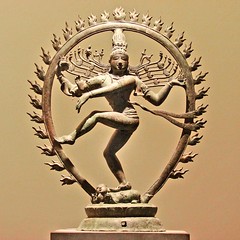
OK, Rumi, let's dance.

Photo Credit: Jean-Pierre Dalbera/ Flickr Creative Commons
We're fools whether we dance or not, so we might as well dance.
~Japanese proverb

Let the beauty you love be what you do. There are a thousand ways to kneel and kiss the earth.
~ Rumi

Nathan over at Dangerous Harvests just made his second anniversary post. Happy blogiversary, Nathan! To celebrate, he posted his first post from the blog. It isn't my anniversary, but I thought I'd go back and look at my first post anyway. Here's a piece of it (from November 2, 2008):
If yogis discovered the secret of happiness thousands of years ago, why do we now still live in a culture of so much suffering?! And to put it more personally, since this is to be my personal journey, why do I still suffer so much? Why do I forget to practice in my daily life, when I know that it will not only make me happier and healthier, but also decrease suffering in the lives of those around me?

In June, I started a Masters in International Education at the SIT Graduate Institute in Vermont. I chose the school because I believe the SIT philosophy is highly compatible with my attempts to increase the practice of yoga in my daily life. In formulating my learning plan, I stated as my second learning objective "Explore ways to bring my career into harmony with my yoga practice." In fact, this is one of the key reasons why I am doing this degree - to give myself the training and the tools to adjust my working life to facilitate my practice - and yes, cheesy cheesy, to do more good in the world.

It's interesting to look back on because I don't feel that way any more. It's not that I don't suffer, but that the quality of my suffering has changed. Back then, I was suffering in the dark. Now, I feel like I can at least suffer with the light on. I have a consistent daily practice, not only of yoga and meditation on the mat or cushion, but also taking these practices into my life and applying them to running, eating, working, and personal relationships. Through this, I've not only physically transformed but I've begun to shine the flashlight of mindfulness into all sorts of dark corners.

In the beginning, this blog was about bringing my career into alignment with my yoga practice. I had forgotten that. Back then, I was working a challenging administrative job and struggling to practice yoga in the workplace. I was reluctant to admit that I was struggling so much because it wasn't the right place for me to be. It was a job that worked with my strengths and which brought out all the worst in me, too. I suffered in many ways at that time: emotionally, physically, mentally, spiritually. The suffering had to get really bad before I was really willing to look at the forces that were holding me there and ask myself: Why? Why fight? Why not just let go?


I was clearly looking for the light switch, even then. I'd started my Masters program because I was already seeking. I wrote those things in my learning plan and started this blog for a good reason. I've even had a Rumi quote up on my computer sidebar, probably since before I started this blog: Let the beauty you love be what you do. It took me all this time to really see it, to look Rumi in the eyes and reply, Yes. OK. I know why you are here. Let's dance.

When I started shining that flashlight around, mostly what I saw was fear. When I looked more closely, I realized that fear is always worse than the thing I fear.  I know this is not a new concept, but the more I sit on my cushion in silence with my eyes closed, the more I have to make friends with it. I began to wonder if I ever had any other motivation for action in my life besides avoiding fear. I began to wonder what would happen if I did something for love. Would the world end? Would the boogieman in the corner come out and get me? Did it matter?

There's never any map for these journeys we take, or rather, I'd say there are many maps - the experiences of others who have taken their own journeys and lived to tell the tale - but they're cryptic and incomplete, and sometimes we flat out refuse to believe that they could really be telling us to leap off that cliff into the darkness. Over the past three years, I've been evolving. I feel like the same person, but when I look back to that first post, I know I am not. I'm teaching at Community College now, and it's scary and difficult and fulfilling. I just started Yoga Teacher Training this past weekend. I'm finally ready to take the necessary risks in order to make sure all the pieces of my life really fit. I've learned to feel gratitude for the fear and suffering, because I've realized that they were the map and directions. They were the flashlight. I'm ready, finally, to really love what I do.

Friday, September 11, 2009

Fear of falling

"Death is not the biggest fear we have; our biggest fear is taking the risk to be alive -- the risk to be alive and express what we really are."
-- Don Miguel Ruiz

"You gain strength, courage, and confidence by every experience in which you really stop to look fear in the face. You must do the thing which you think you cannot do."
-- Eleanor Roosevelt


Arm balances and inversions are classic ways to work with the emotion of fear in hatha yoga. I've recently been re-visiting both after years of avoidance. These poses raise in me, as for many people, a sense of impossible challenge - both in terms of strength and skill. I was content with my sun salutations, but recently I've been encouraging myself to confront my fears and work on these postures. I've learned a lot in particular from bakasana (crane pose) and salamba sirsasana (headstand) in recent weeks. Both poses evoke fear in me - but that has come about in different ways for each pose - and in both poses I have recently begun to overcome my fear of falling.

I was introduced to bakasana several years ago by a teacher I liked and trusted. I had been pursuing a lot of gentle and restorative yoga during that period, which was helping me cope with a stressful job change. As I returned to more faster, flow-based asana, I discovered that I had built a lot of strength and flexibility working in the gentler traditions. When this teacher demonstrated bakasana, I believed her assertion that I could accomplish this pose. Like a child who has not yet learned that the world holds dangers, I went into the pose innocently and fearlessly. I soon lifted into the beginner variation of this pose, feet lifted but arms not yet straight, and I loved how it felt to balance there.

So where did my fear of this pose come from? In researching for this post, I found this about arm balances on Mark Stephens' web page: "They involve fear and ego while bringing about self-confidence and humility." I was about to experience the ego and humility part of things. Eager to show off this new arm balance one day, I attempted it at home without warming up, went into it too quickly, held it briefly, and then crashed hard onto the bridge of my nose. It hurt! I was wearing glasses at the time, which bent quite badly but luckily could be repaired. My ego and my innocent fearlessness, however, took more permanent damage and for the next two years or more I was unable to lift even one foot off the ground in this pose.

Headstand is different. Inversions terrify me (with the exception of shoulder stand, which I think I went into early enough in my practice that it didn't occur to me to be scared). Of course I can't do that, I tell myself. I'll fall and/or smash my head on the ground! Whenever headstand has come up in class, I've done the preparatory exercises, which were scary enough. Working with my fear in the preparatory poses was hard; it never occurred to me to actually try to kick up into the full pose.

Several weeks ago, I was practicing at home and I just kicked up into headstand at the wall. I have no idea what made me do it. There's no question that I had the ability to do this all along. I could tell that my alignment was good in the pose; my weight was in my arms, and I was comfortable there. All the fear just melted away, and since I've been able to continue working in the pose. It has done wonders for my self-confidence!

Bakasana is harder. I wonder if this is because my body has a painful memory to go along with the fear. I am just beginning to trust the strength of my arms again, my ability to know how the weight of my body should be distributed. It takes me a long time to find the courage, but I'm finally able to lift my feet off the ground again. I hope that one day I'll be able to straighten the arms.

I'm starting to recognize how often these two types of fear come up in other aspects of my life. Sometimes we're afraid that we'll fall (or fail) because of a previous experience; sometimes we're just afraid because of what lurks in our imagination. It's important to acknowledge that fear is a legitimate response to many things. After all, falling heavily on your head or neck is dangerous. Having your heart broken is devastating. Losing your job can put you in dire financial straits. The list goes on and on. But fear is so often paralyzing, and it can prevent us from experiencing our true potential, from continuing to learn and grow. We have to learn to assess our abilities and strength; to know when to go further; to have faith in our own resources and in those who support and encourage us; and to know what is and is not a serious consequence. Whether it's an inversion or love, the results of that trust can be exhilarating.

Let yourself take flight.

Namaste.

Thursday, September 3, 2009

All phenomena proceed from the mind

I'm currently reading The Joy of Living: Unlocking the Secret and Science of Happiness by Yongey Mingyur Rinpoche. (Thanks Stephanie. xx)

Here is a video of Mingyur Rinpoche teaching. The analogy of the watch is one he talks about in the book.


Today I was struck by his description of one of the Buddha's teachings. In it, a young man comes to a great master seeking a profound teaching. The master agrees to share one - after the young man has a cup of tea. As he's about to drink, the tea transforms into a beautiful lake. The young man stands looking at the lake, and a girl appears. They fall in love at first sight and he goes home with her. Her parents also like him, and the two get married and have two children.

In his teens, their son falls ill and dies, and their daughter is killed by a tiger shortly thereafter. Overcome with grief, the man's wife drowns herself in the lake. Her mourning parents stop eating and starve to death. Having lost everything, the young man goes to the lake to drown himself. As he's about to throw himself in, he suddenly finds himself back in the master's house, holding the cup of tea.

Though he had lived an entire lifetime, harly an instant had passed; the cup was still warm in his hands and the tea was still hot.

He looked across the table at the teacher, who nodded, saying, "Now you see. All phenomena proceed from the mind, which is emptiness. They do not truly exist except in the mind, but they are not nothingness. There is your profound teaching."

As I read the teacher's words, I felt a kind of liberation as a whole lot of fear fell away. I'm still not entirely sure that I know why, but as someone who has despaired after loss, this story gave me an incredible feeling of space and hope. Doesn't this story speak to something we all fear - losing everyone we love? This unspeakable pain... it is definitely not nothingness. But our experience of it arises in the mind, sinks back into the mind. And most dangerous of all is the fear of pain that has not happened. Sometimes we make that into something so solid, so real.

All phenomena proceed from the mind, which is emptiness.

Meditation teachers often use the analogy of the mind as the sky, and thoughts as clouds that arise from it and pass through it but are not permanent. (I've also heard the analogy of leaves on a stream, and I particularly like the sense of movement I get from that image.) You can sit and watch those thoughts arise, drift across your mind, and float away without attaching to them. Sit and watch the fear of incredible loss with identifying with it.


All phenomena proceed from the mind, which is emptiness.
Happiness is our birthright.
We all have monkey mind. Watch it chatter. Let it go on and on.
Let the big sky of the Self be still.

Sunday, May 31, 2009

Letting go of the past

"Do not seek to have everything that happens as you wish, but wish for everything to happen as it actually does happen, and your life will be serene."
-- Epictetus


"
Our deepest fears are like dragons guarding our deepest treasure."
--Rainier Maria Rilke

This morning in class, we worked on Utthita Hasta Padangustasana (Extended Hang-to-Big-Toe Pose). I know the lovely lady on the Yoga Journal site has a big smile on her face, but this is one of those poses that pushes all my buttons and makes me lose my cool. Between sides, Nikole asked us to let go of our struggles on the first side and start the pose on the second side with a fresh and open mind. She said, "We spend so much time living in the past, don't we? Even the things we worry about happening in the future are just things that happened to us in the past. Just let it go."

Fear is a useful thing when you're being chased by a bear. It's much less so when you're trying to balance on one leg with your foot in the air or considering changing your job or moving to a new city. And there's a fine line between learning from past experience (arguably good) and assuming that because things did not go the best way possible last time you tried something that it will be so again in the future (arguably bad). The question is how to know when fear serves to protect us, and when it holds us back from reaching great treasures.