Showing posts with label off the mat. Show all posts

Monday, April 18, 2011

The wisdom I once knew

Yoga teacher training is giving me lots that I want to write about - and no time to write in. I hope these posts that are rattling around in my head will eventually make it here. Some of the things I've been learning seem new; other ideas are realizations that I've been reaching towards for some time but have only just found within my grasp. Still other ideas seem like things I knew once but thought I had forgotten.
Photo Credit: Tela Chhe/ Flickr Creative Commons
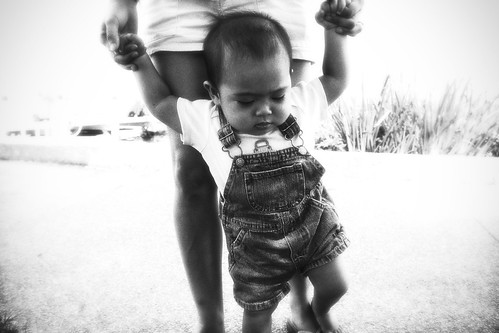
We all learned to walk once. From our positions on the floor, we were driven to grasp nearby objects and pull ourselves upright. In that position, we had to use our muscles in new ways, figuring out how to stabilize joints and stack our bones. Even then, with some measure of stability, we weren't satisfied. We had to walk, and then run - learning to keep it all together and balance in a constantly shifting world. We moved too fast, leaned too far, and fell - often, and sometimes painfully. We howled when we hit our heads on the corners of tables and scraped our hands and knees - but the next opportunity, we pulled ourselves upright and ran headlong into the next disaster, fearless, until we learned to feel our own center of balance and remain steady on our feet.
Photo Credit: Neeta Lind/ Flickr Creative Commons
Now, many years later, most of us don't remember how we learned to walk. We're blissfully unaware of the painful headlong falls, and we have no conscious memory of how we learned to balance on our feet. When it comes to balancing upside down - on your head or hands or forearms - it may seem like something completely new. As I try to understand the limits of my balance in inversions, however, I'm realizing that I have done this all before. I've already been through this process of challenging the force of gravity, of learning to stack all the bones in my body on top of each other, of finding the point of lightness and effortless balance in a seemingly impossible vertical position. Somewhere, in those deep hidden places in the body where forgotten memories go, I know how to learn this.

Back then, those hurtling falls didn't faze me for long. Now, when I reach too far with my legs and come crashing to the ground, I'm left with a lingering fear that sends me back to basics, just trying to straighten my legs into the air again. Somewhere deep inside, I need to connect with the toddler me - that little girl who wanted so badly to walk around, who had such incredible confidence to try again, who had not yet learned to dwell on past failures. In my practice, I'm seeking the simplicity of being of a child. I'm striving to bring in a little innocence to balance my wisdom, to infuse beginner's mind into these poses. I want to do them with all the knowledge I've gained from my previous attempts, but also with the openness that comes with trying something for the first time.

Surely part of the practice is to walk, run, dance, balance on your head, and love as though you've never been hurt, never fallen down, never cracked your head against the corner of a table. To be fully present through the falling and the getting back up, and then to be fully present in the next attempt - as though falling last time had nothing to do with what will happen this time - because it doesn't, in fact, as hard as that is to believe. Maybe that's all of the practice in fact, all the work there really is to do. I'm starting to think that it will be enough.

Tuesday, March 22, 2011

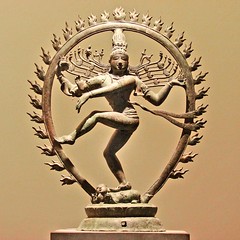
OK, Rumi, let's dance.

Photo Credit: Jean-Pierre Dalbera/ Flickr Creative Commons
We're fools whether we dance or not, so we might as well dance.
~Japanese proverb

Let the beauty you love be what you do. There are a thousand ways to kneel and kiss the earth.
~ Rumi

Nathan over at Dangerous Harvests just made his second anniversary post. Happy blogiversary, Nathan! To celebrate, he posted his first post from the blog. It isn't my anniversary, but I thought I'd go back and look at my first post anyway. Here's a piece of it (from November 2, 2008):
If yogis discovered the secret of happiness thousands of years ago, why do we now still live in a culture of so much suffering?! And to put it more personally, since this is to be my personal journey, why do I still suffer so much? Why do I forget to practice in my daily life, when I know that it will not only make me happier and healthier, but also decrease suffering in the lives of those around me?

In June, I started a Masters in International Education at the SIT Graduate Institute in Vermont. I chose the school because I believe the SIT philosophy is highly compatible with my attempts to increase the practice of yoga in my daily life. In formulating my learning plan, I stated as my second learning objective "Explore ways to bring my career into harmony with my yoga practice." In fact, this is one of the key reasons why I am doing this degree - to give myself the training and the tools to adjust my working life to facilitate my practice - and yes, cheesy cheesy, to do more good in the world.

It's interesting to look back on because I don't feel that way any more. It's not that I don't suffer, but that the quality of my suffering has changed. Back then, I was suffering in the dark. Now, I feel like I can at least suffer with the light on. I have a consistent daily practice, not only of yoga and meditation on the mat or cushion, but also taking these practices into my life and applying them to running, eating, working, and personal relationships. Through this, I've not only physically transformed but I've begun to shine the flashlight of mindfulness into all sorts of dark corners.

In the beginning, this blog was about bringing my career into alignment with my yoga practice. I had forgotten that. Back then, I was working a challenging administrative job and struggling to practice yoga in the workplace. I was reluctant to admit that I was struggling so much because it wasn't the right place for me to be. It was a job that worked with my strengths and which brought out all the worst in me, too. I suffered in many ways at that time: emotionally, physically, mentally, spiritually. The suffering had to get really bad before I was really willing to look at the forces that were holding me there and ask myself: Why? Why fight? Why not just let go?


I was clearly looking for the light switch, even then. I'd started my Masters program because I was already seeking. I wrote those things in my learning plan and started this blog for a good reason. I've even had a Rumi quote up on my computer sidebar, probably since before I started this blog: Let the beauty you love be what you do. It took me all this time to really see it, to look Rumi in the eyes and reply, Yes. OK. I know why you are here. Let's dance.

When I started shining that flashlight around, mostly what I saw was fear. When I looked more closely, I realized that fear is always worse than the thing I fear.  I know this is not a new concept, but the more I sit on my cushion in silence with my eyes closed, the more I have to make friends with it. I began to wonder if I ever had any other motivation for action in my life besides avoiding fear. I began to wonder what would happen if I did something for love. Would the world end? Would the boogieman in the corner come out and get me? Did it matter?

There's never any map for these journeys we take, or rather, I'd say there are many maps - the experiences of others who have taken their own journeys and lived to tell the tale - but they're cryptic and incomplete, and sometimes we flat out refuse to believe that they could really be telling us to leap off that cliff into the darkness. Over the past three years, I've been evolving. I feel like the same person, but when I look back to that first post, I know I am not. I'm teaching at Community College now, and it's scary and difficult and fulfilling. I just started Yoga Teacher Training this past weekend. I'm finally ready to take the necessary risks in order to make sure all the pieces of my life really fit. I've learned to feel gratitude for the fear and suffering, because I've realized that they were the map and directions. They were the flashlight. I'm ready, finally, to really love what I do.

Saturday, March 5, 2011

Making choices in practice: limbs, branches, and paths


Yoga texts and articles, ancient and modern, abound with metaphors for the choices we make in our practice. The eight components of Astanga Yoga are often referred to as the eight "limbs", while the different approaches we can take to practice are often called "branches" or "paths" of yoga. (Different sources list varying numbers of "branches" - raja, karma, bhakti, and jnana are usually included, and then many modern descriptions include hatha, tantra, kundalini, and various others). These metaphors obviously resonate with people because they have stuck around. The metaphor of the journey is one that I have always connected with personally, hence the name of this blog. My practice is not static, but evolving. It grows and changes, depending on my needs. The deeper I go, the more committed I am to practice, but also the more willing I am to take detours and walk different paths for a while.

I'm beginning a yoga teacher training program in less than two weeks, so I've been thinking a lot about my personal practice and what kind of a teacher I will be. It's definitely important to me to be flexible in my practice and to learn about different limbs/ branches/ paths/ [insert metaphor here] so that I will be aware of my choices when my needs change. It's also important to try different styles of yoga to find which you connect with most strongly. Any path can be a road in.

If yoga is a journey and there are many paths in the woods, I think these paths intersect in various places, so there's no need to pick just one. There have been times when reading and studying the philosophy of yoga has been how I've really been able to connect. Sometimes, I just want to do asana, and other times I want to meditate or chant or help others. I am grateful for all these choices because they allow me to remain engaged with my practice no matter what is going on in my life.

However, I also think it can be useful to explore the paths that seem a little darker and less inviting to you. You may decide not to stay on that path after all, or you may discover that it was something within you that was blocking your path and perhaps you were meant to walk it for a while after all. Sometimes it is exactly the practice that challenges us, the one we resist, that is the one we need the most. Sometimes, I think it's possible to use the concept of "different paths" to avoid exploring an aspect of practice that scares us or promises to be difficult.

After a long time practicing mostly off the mat, I am coming home to hatha yoga. I say coming home because, like many so-called Westerners (we really need to find a better term for that), hatha yoga is where I began. I must say it feels like home, and I'm happy to be practicing mostly hatha at the moment. That doesn't mean I'm sticking with one style of asana practice, though. Some days I do a lot of pranayama and meditation, and other days I just want to do a million vinyasas. I'm enjoying exploring different styles in my home practice and in the classes I attend. I think it makes me a better person, and I think it will make me a better teacher too.

On the other hand, I'm aware that this might just be a personal preference. Some people probably prefer to commit to a path and follow it deeper and deeper. There isn't any one "right" way to do it. Each yogi has to find - or make - his or her own road.

If you practice yoga, what has your path been? Have you focused on one or more limbs and not others? Have you picked a branch and gone way out, or are you swinging from branch to branch as you go along? Do you feel like you've found "your path"?

Saturday, February 12, 2011

Reflections of our true nature

Photo credit: Bryan Ray (black_listed/ Flickr Creative Commons)
"While we practice conscious breathing, our thinking will slow down, and we can give ourselves a real rest. Most of the time, we think too much, and mindful breathing helps us to be calm, relaxed and peaceful. It helps us stop thinking so much and stop being possessed by sorrows of the past and worries about the future. It enables us to be in touch with life, which is wonderful in the present moment."
- "Peace is Every Step" by Thich Nhat Hanh

As I mentioned in a post last month, I've been following Tricycle Magazine's Commit to Sit challenge for the past 27 days. As it draws to a close, I've been reflecting on the experience. I did my full-day meditation challenge yesterday and am finishing the experience with two days of the regular Week 4 program. The full day of meditation was... well, challenging for me. I've never meditated for longer than an hour at a time before. The experience ranged from pain, frustration and self-hatred to bliss, gratitude and insight. Towards the end of the second two-hour block, I rose to do walking meditation and I felt like I was gliding through each step in pure awareness.

In that moment, I had a new understanding of the ethical components of yogic and Buddhist practice. During the Commit to Sit program, I committed to the Five Precepts as best I could. These practices were familiar to me as they share a lot in common with the five yamas of yoga. I've always struggled to follow the yamas, feeling some of them were almost unattainable. The yamas are often translated as "restraints" or "abstinences" or even commandments or "thou shalt nots" (ugh!). I recently encountered an alternate translation in Nischala Joy Devi's The Secret Power of Yoga book, which is subtitled A woman's guide to the heart and spirit of the Yoga Sutras. Whether or not you agree that a heart-centered perspective is a purely feminine construct, it is interesting to read this refreshing and positive take on Patanjali's Yoga Sutras text.

Many traditional translations of this part of the sutras (II29-39) think about the yamas as restrictions to our behavior towards others (ahimsa = non-violence or non-harming; satya = truthfulness; asteya = non-stealing; brahmacharya = well, we can't agree on a translation for this one because we're afraid it might mean no sex! but commonly continence, sense-control, celibacy, or the like; aparigraha = non-hoarding, non-stealing, non-greed). Nischala Devi has a different take (p.p. 168-169):
"Often, to simplify the enormous breadth and depth of the Yamas and Niyamas, they are called the "Do's and Don'ts of Yoga" [sic] or sometimes the "Ten Commandments of Yoga." This is taking a highly refined and virtuous way of living expressed throughout the millennia and reducing it to a finger-shaking image... When observed on a subtler level, the Yamas and Niyamas seem to be more of a tribute to being, affirming our already Divine nature..."

"Knowing the importance of repeating a statement in the affirmative, I have chosen to translate (as much as I possibly could) using positive, life-affirming language... When words or phrases evoke fear, punishment, or denial of pleasure, they encroach on our spiritual practices and diminish rather than enhance the glory of our true nature."
 Her translation of the yamas (reflections of our true nature) is:
  1. Ahimsa: reverence, love, compassion for all
  2. Satya: truthfulness, integrity
  3. Astheya: generosity, honesty
  4. Brahmacharya: balance and moderation of the vital life force
  5. Aparigraha: awareness of abundance, fulfillment.
Doesn't that feel different?

Anyway, whatever translation you use, it seems clear enough that it's desirable to achieve compassion and reverence for all life, integrity, generosity, and a sense of fulfillment. But then you're going about your day and you yell at the driver in front of you, and then you gossip about someone at work, and then you decide not to share part of your lunch with a coworker who doesn't have any because you want it all for yourself.

So, how in the world do you achieve this stuff? What occurred to me yesterday in meditation is maybe you just slow down. We go through our lives so fast, we can barely see them happening to us, just like we walk so fast, we can't feel how our body is moving through the steps. Maybe you just slow down enough that you can see and feel what is happening. In that walking meditation yesterday, I felt that, at my core, I was calm and peaceful. Each step was smooth and steady and careful. From that place, I think the yamas would arise naturally and with ease. "Reflections of our true nature."

I know that this isn't a new concept, but experiencing it the way I did was new to me. Of course, slowing down that much is easier said than done. But it's a start. It's a piece of the puzzle, something concrete to move towards. It sounds easier than just love everyone and everything. I'll give it a try.

Friday, January 28, 2011

The best time to practice is right now

Yoga is the perfect opportunity to be curious about who you are. ~ Jason Crandell

For those wounded by civilization, yoga is the most healing salve. ~ Terri Guillemets

The deeper I go into practice, the more I become aware of how complicated I make life sometimes. There are all these layers of the mind that peel away. It reminds me of the way the experience of the asanas changes on a physical level. For the first few dozen or even hundred downward facing dogs, the experience is pretty much holding your breath and looking forward to coming down. And then suddenly, one day you actually feel what it means to inwardly rotate the thighs and spread the hip bones and all this space opens up in the pose. And it will change your world, that feeling. See if it doesn't.

Like this, too, in the mind. At first, learning to breathe through and experience difficult emotions without acting, I thought I was learning to deal with the present. (Side note: when I say that it sounds as if I have already learned to breathe through and experience difficult emotions without acting. I can assure you, I haven't. That's why they call it "practice.") Anyhow, I'm starting to realize that a strong emotional reaction is almost never about the present. It's a sure sign that I'm holding a past wound up as evidence in a present situation - probably holding it against someone who had nothing to do with the original pain in the first place. Take a close look and see if this isn't true. And it will change your world, that understanding.

I started this post out thinking that I was going to write about breathing through reactions in the present and then boom! Insight. Look out - you never know when it's coming. Originally, I was going to explore my reaction to a harassing comment left here, but now I see I don't have to. That comment, in the present, means nothing. Who knows why people do these things? His problem is not my problem. The pain and uncertainty and anger it triggered - that's old stuff, really old stuff. And the illusion of ego. Right now, in the present, there's just clarity and a sense of compassion.

The content of this post may have evolved, but I can keep the title because the time is now. Peel away all those layers of history, and inside is the jewel. It is all these illusions that are complicated. The present is incredibly simple. I wonder what is behind the next layer?

Wednesday, August 25, 2010

Being present on the journey, releasing the destination

Today it became obvious that someone has a problem with me. Now I think most people encounter difficult relationships (or difficult patches in good relationships) from time to time. My self-talk in these moments tends to oscillate between, This is totally not my fault. There's nothing I can do. This person has her own issues, and, I'm a horrible person. I've ruined another relationship. It's all my fault. If only I'd..., I could have prevented this. Most of the time (and probably in this case), it's somewhere in between the two extremes. But also, placing blame is beside the point.

"To practice is to use all that arises within us for the growth of understanding, compassion, and freedom."
~ Jack Kornfield

So there is the difficulty itself, and then there is my response to the difficulty. I sat this afternoon in meditation, watching the thoughts surrounding this relationship swirl around and recognizing that they resemble other thoughts that often come up for me in meditation. I'm reading A Path With Heart, and I tried to follow some of Kornfield's suggestions for exploring what he calls insistent visitors. Kornfield explains, "When any experience of body, heart or mind keeps repeating in consciousness, it is a signal that this visitor is asking for a deeper and fuller attention... We must recognize that this is its way of asking us to give it more attention, to understand it more clearly. This process involves investigation, acceptance, understanding, and forgiveness."

So that is the journey. I started to explore the physical sensations, feelings, etc. associated with these thoughts. I sat there, trying to experience all of this, trying to understand it further. And suddenly, I heard this little voice under all that practice. It said, Do you understand it yet? If you can just understand it, you can fix this... and then you won't have these problems any more."

That kind of stopped me in my tracks. Wow. Is that where I think I'm going? Is that what I've been practicing for all this time? So I won't have any more difficulties? So people will love me? I asked myself these questions, and whatever had spoken inside me shrugged and said, Yep.

OK then. Now we have a problem. Even going as far as enlightenment, assuming this state exists, is no guarantee of being loved by all beings. It is not a get-out-of-jail-free card. It does not exempt one from all future hardships. It certainly doesn't pay the rent. But more importantly, here is a deeper, more insidious version of the story "It's all my fault. If only I'd..., I could have prevented this."

So I guess now my practice is to learn to be present on the path, not to arrive at what I perceive to be the destination, but to truly experience what the path is. To fully experience what surprises I might encounter along the way. To truly seek understanding, compassion, and freedom as they exist everywhere on the journey and not just at the destination. To go deeper down the rabbit hole and see what illusions and attachments are hiding in the next layer down.

Darn it, says that little voice. I really thought we were getting somewhere. I was sure that universal admiration was just around the corner. That would have been way easier.

All I can do is shrug and say, Yep.

Tuesday, May 25, 2010

Permanent Changes

I just finished presenting my Masters project at our final seminar. My project involved designing an innovative pre-college program for adult international students, based at an ESL school. I won't go into all the details, but I will say that it involves using yoga, meditation, breath awareness, and mindfulness to combat stress related to school and culture shock. Wow. When I thought of it, I thought someone should be doing this. Suddenly I am the one doing this. I am the perfect person to be doing this. My whole life has led me to it. Exciting, scary, amazing, surreal.

I was not nervous during the presentation. I felt mindful. After, many of the comments said that I had both a calm and engaging presence. I was deliberate and authentic. I spoke from the heart.

Recently, I heard my classroom presence described as "zen". Calm, soothing, zen. I've been hearing this a lot lately.

The thing is, I'm pretty sure I didn't hear these words being used to describe me a few short years ago. I'm pretty sure then it was things like intense and emotional and passionate that came out. OK, I guess I still am those things but also I have this new dimension, this calm woman with the soothing voice and the poise and the precise speech. Where did she come from?

What has changed? I meditate twice a day now. And so ~ she was in there all along.

Deep changes. Now I stay more connected to what is, cling a little less to myself. I am afraid less. I am upset less by change than I used to be. Not all the time, I am not saying I am anywhere yet, I am not saying I have this down. I am just saying ~ people seem to describe me differently than they used to.

As part of my research, I looked at Transformative Learning Theory, originally described by Jack Mezirow in 1978 (coincidentally the year of my birth) and which has been studied extensively ever since. This theory suggests that when we encounter a situation that does not fit with what we believe about the world, we are disoriented. This may inspire us to make a permanent and irreversible change in the way we see things, and this in turn will change our actions, our words, our relationships with others. This is not a surface change - it is a change to our beliefs, our values, our worldview at the deepest level.

And isn't this what happens on the yoga mat, on the meditation cushion, when we take our practice out into the world? Disorientation... and then maybe, something shifting inside. Something moving over and permanently making room. Making the heart a little more expansive.

I am told that for academic work, we must connect theory to practice and practice to theory. Practice. I once understood the practice of education and the practice of yoga to be different. Now I think I understand - it is all the same practice. My heart smiles.

Sunday, April 4, 2010

Give yourself permission

And as we let our own light shine, we unconsciously give other people permission to do the same. As we are liberated from our fear, our presence automatically liberates others.
~ Marianne Williamson

One of the hats I wear is that of ESL teacher. Last week in class, my students were struggling with a difficult listening exercise, and I found myself saying I give you permission to be wrong. I wonder if that shifted anyone's world the way it shifted mine. I give you permission to be wrong. How often do we explicitly receive or grant ourselves this permission? It's true that we are often told that it is OK to make mistakes as long as we learn from them, but in fact I think the overarching lesson of our society is that to be wrong is a terrible thing.

Giving yourself permission to be wrong is the first step down a path to unknown discoveries. It is the first step to learning, exploring, discovering and growing as a person. By not only walking that path fearlessly but also explicitly giving others the permission to be wrong, we can give the world a great gift. I know that when I offered this permission to my students I really meant it and so I would like to learn to receive this permission - from others, if it's granted, and from myself. I can balance on my head and bind in Side Angle, but I don't think I've ever really given myself permission to be wrong, to shine my light without reservations, to start down that path with the unknown destination. I am still new to this practice, still learning to take my first steps.

Wednesday, March 31, 2010

The warrior within


Birdwings
Your grief for what you've lost lifts a mirror
up to where you're bravely working.
Expecting the worst, you look, and instead,
here's the joyful face you've been wanting to see.
Your hand opens and closes and opens and closes.
If it were always a fist or always stretched open,
you would be paralyzed.
Your deepest presence is in every small contracting and expanding,
the two as beautifully balanced and coordinated
as bird wings.

~ Rumi
I've been thinking about how it is sometimes helpful to find things that allow you to realize your power and grace, to connect with the light within. On the other hand, it can be detrimental if you identify your power and light too strongly with those things. I was thinking about this first with regards to running. Training for a marathon made me feel invincible: strong, courageous, capable, joyful - but when I became injured and couldn't run, I lost not only the activity itself but also my strength, courage and joy. In another example, a woman might feel like a goddess when she puts on an evening gown, but she might fail to notice that same goddess within herself when she's wearing old sweatpants or is naked. A yogi might feel power and courage when standing in a warrior pose but not when entering into a difficult work negotiation.

I suppose this issue is really about impermanence again. Though these things have the power to open our eyes to the potential that lies within us, they fade in and out of our lives. They cannot be depended upon, and we cannot hold onto them no matter how we try. Knees can be injured, an evening gown can be torn, our bodies age and change shape, and we cannot always stand in warrior pose. The paradox is that by experiencing them fully and letting them go, we can somehow retain their power and grace, whereas by clinging to them we seem to lose everything.

For myself, I am working on finding the warrior within, even when I'm not on the mat. Especially when I'm not on the mat. Awakening is really about what Rumi says so beautifully: learning to see your deepest presence in every small contracting and expanding, in every inhale and exhale, in every moment. It is an amazing gift to come into yourself fully, but it is a gift we might not appreciate if we didn't fade in and out of this knowing, this being present. It is a gift we can find around every corner, each expansion and contraction of the breath in the body, of the mind, of the spirit, another opportunity to go deep.

Photo credit: Flickr Creative Commons

Sunday, March 21, 2010

What does it mean to "do yoga"?

You cannot do yoga. Yoga is your natural state. What you can do are yoga exercises, which may reveal to you where you are resisting your natural state.
~ Sharon Gannon


In theory, practice and theory are the same. In practice they are not.
~Yogi Berra


Recently I was reading Lulu's post entitled "Can Anyone Really Say What Spirituality Is?" over at her Oceans and Avocados blog, and then I surfed over (as one tends to do these days) to the Eco Yogini post that inspired it. They got me to thinking about how my own view of yoga is similar and different to theirs, and also a little bit about both my practice and my research of late. Eco Yogini describes the point of yoga as being spirituality and discusses the differences she feels between her spirituality and what is traditionally taught in yoga. I guess I am coming to see the point as Sharon Gannon describes it in the quote at the beginning of this post. Yoga is a set of tools that we can use to reveal something about ourselves and how we relate to the world. That can be spiritual - it is for me - but it is also deeply personal, emotional, and it can be both a mental and physical journey too.

Lulu poses the questions: Who decides what spirituality/ zen/ yoga are? and What if the definitions don't work for you? These are important questions. There is a vast range of beliefs and practices that have sprung up out of every spiritual tradition, including yoga, and I think this is indicative of the fact that every set of tools does not lead every person to the same destination. What makes intuitive sense to one person, another person may be unable to connect to. When one person follows the practices of her teacher, she may discover an entirely new insight and there we have another school of practice. I am amused to be quoting Yogi Berra here but he makes an excellent point here in a way only he could: theory and practice are not the same thing, and one never replaces the other. The Buddha said this in another way: Doubt everything. Find your own light. He didn't want anyone to take his teachings as the Gospel, but rather for each to do his own practice and figure out what it is that he has inside.

Many people think of yoga as the practice of asana or postures, as a way to lose weight and stay in shape, or as a way to reduce stress. Patanjali said that Yoga is to still the patterns of consciousness [so that] pure awareness can abide in its very nature. The full system of yoga has eight limbs and is a fully formed way of living including both ethics and lifestyle practices that go far beyond asana. For my personal practice, this is very important. In the past two years, I have had periods of time where I've focused intensely on asana and this has had tremendous physical, emotional, mental and spiritual benefits. However, I have also had periods where I've focused more intensely on pranayama (controlling the breath) or meditation or various ethical principles. Each of these practices has also had intense physical, emotional, mental and spiritual outcomes for me. I very passionately would defend the idea that these are no less "doing yoga" than asana practice is, and in fact simply doing asana does not equal "doing yoga" for me.

However, right now I'm doing research and designing curriculum to bring some of these yogic practices - asana, pranayama, meditation - into educational programs to help international students manage stress related to studying in a foreign country. Through this work - and through reading about people's experiences in blogs such as those I've mentioned here - I am slowly becoming less of a purist. To me, the benefits of any one of these practices are so profound that to do it, even in isolation, can deeply transform a person's experience of a difficult situation. So who am I to look down on someone who doesn't follow the "whole system"? If a person won't do yoga because their religious beliefs prohibit it, who am I to withhold the secret of the three part breath from them? If someone goes to yoga class to work out and it makes them feel better, who am I to insist that they get spiritual? Meditation by any other name is still meditation. If I don't formally sit in meditation but I do take a moment on the bus to let my thoughts settle and follow my breath, who are you to judge my practice?

I know that not everyone will agree with me. There was a time when I might not have agreed. But these days, I'm thinking of ways to bring the benefits of yoga to more people. And if that involves teaching "stress management" or "deep breathing" or "quiet time" then so be it. The world will be a better place if more people connect with their breath.

Namaste.

Saturday, March 20, 2010

Taking root

Among the many definitions of the noun root at dictionary.com:
  • The usually underground portion of a plant that lacks buds, leaves, or nodes and serves as support, draws minerals and water from the surrounding soil, and sometimes stores food
  • A base or support
  • The condition of being settled and of belonging to a particular place or society (often used in the plural)
  • An essential part or element; the basic core
  • A primary source; an origin
In discussions of physical asana practice, you will often hear the phrase "root to rise." The basic idea is to create a firm foundation for the pose (usually by grounding your feet) and send energy down into the earth through that foundation. By aligning your body correctly above this foundation, you allow a counter-flow of energy to move upwards and lift your body lightly, without effort. This allows you to practice asana with what Patanjali described in the yoga sutras as "steadiness and ease."

This sense of rooting to rise is important in balancing postures. In vrksasana, or tree pose, it is easy to visualize this principle of rooting down and growing upwards through the image of the tree. One way to challenge the balance in this pose is to close the eyes, relying on instinct and the internal senses rather than the visual representation of the external environment in order to achieve balance. This requires a little bit of trust also. Of course, poses of all kinds can allow you to practice achieving a sense of lightness through the use of this principle.

Because of the multiple definitions of root(s), the idea of rooting to rise lends itself as a metaphor for off-the-mat practices. For example, root can refer to one's source or origin, so grounding yourself firmly in the past can allow you to move easily into the future. Learning to trust the instincts rather than visual feedback in poses such as vrksasana can also have lessons for how we achieve balance in our lives off the mat.

We use the phrase "returning to one's roots" to describe the process of going back to where you came from, both physically and ideologically. In many ways, I feel like I've gone back to my roots in the last year and a half. Returning to your roots does not necessarily mean regressing. Rather it is a process of integrating elements of your history and experience into who you are now. It can mean simply honoring parts of yourself that you've cast aside and re-evaluating what role they can play in the present moment. Maybe they no longer serve you, in which case they need only an acknowledgment, some gratitude for the role they played in your journey. Or maybe, looking back you will find that your past still holds you up. If we deny our pasts, we will always lack a solid foundation and when we are required to operate on intuition, we will lack the stability needed to stand firm. Only by building on the past can we truly find balance. It is your history that gives you the energy and anchor you need to grow above the canopy and wave your leaves in the sunlight.

Sunday, March 7, 2010

Accepting limitations

“Through practice, I’ve come to see that the deepest source of my misery is not wanting things to be the way they are. Not wanting myself to be the way I am. Not wanting the world to be the way it is. Not wanting others to be the way they are. Whenever I’m suffering, I find this ‘war with reality’ to be at the heart of the problem.” -- Stephen Cope

“These days, my practice is teaching me to embrace imperfection: to have compassion for all the ways things haven’t turned out as I planned, in my body and in my life – for the ways things keep falling apart, and failing, and breaking down. It’s less about fixing things, and more about learning to be present for exactly what is.” --Anne Cushman


Once again, I've been gone from this blog for a while. I've been practicing out in the world. I've been writing, but not about yoga. I've been going down different avenues, most of them very internal. Once again, I feel like it's time to come back here and see what there is to be said, explicitly, about practice.


Since the New Year, I've been practicing meditation and pranayama more intensely. I've been reading a lot about yoga philosophy and mindfulness in daily life, and my asana practice has dropped to the side. I've also started training for a marathon. As I've been increasing my weekly mileage, I've been exploring the meditative possibilities of running - how it feels to connect with the body and the breath, to use yogic practices like sending the breath into areas of discomfort and using mindfulness with mental habits such as fear of failure and the desire to give up.


Approximately three weeks ago, I started getting some minor nagging knee pain during runs. It was so negligible that I put it out of my mind and thought I just needed to stretch more and rest my legs. However, on February 22 I completed a 10-mile run and I ended it with severe pain in my knees which worsened over the course of the afternoon and evening. I soon realized that I had a serious overuse injury that was going to require an absolute halt to training until I could move pain free.


I was devastated. I had invested all my identity in my running and had come to rely on it for a sense of purpose and power in my life. At first, I wanted to give up on everything and crawl into bed and never come out. But then all the meditation practice I've been doing kicked in. Instead, I was determined to listen to my body until it spoke to me. I gathered as much information as I could about my condition, and I asked my knees what they needed. At first, they just wanted me to stop moving, but then as the pain subsided, I began to be able to identify specific areas of difficulty and how they were affected by the way I moved my body.


I held back. I watched all my thoughts and practiced letting them go, whatever came up: a sense of failure, a sense of desperation, a competitive urge. When my knees asked for it, I got on my yoga mat and discovered that my body knew which areas to work and stretch to give my knees the freedom of movement they required. Yesterday, I woke up and my body shouted, "RUN ME!" At first, I doubted it, but when I took to the road, I discovered that I could run 4 miles without pain. Not only that, but I was present in every step. I felt the impact of each movement; I felt the chain of energy of each impact with the road.


As soon as we are formed, our body begins to be affected by being in the world. Like the tree trunk in the picture accompanying this post, we are worn by the business of living and by our contact with those living around us. We are not perfect, we are not invincible, we cannot do whatever we want. We cannot take on everything. We like to think we can, but our bodies let us know... and if we don't listen, they shout louder. If we fight it, if we ignore our bodies, we end up in pain. What I have learned these past two weeks is that the pain is not here to punish us. The pain is our teacher. It is here to remind us to listen and to find what it is that we need. Come back into your body. Ask it what it has to tell you today. And then listen. Whether you like what it has to say or not.

Friday, September 11, 2009

Fear of falling

"Death is not the biggest fear we have; our biggest fear is taking the risk to be alive -- the risk to be alive and express what we really are."
-- Don Miguel Ruiz

"You gain strength, courage, and confidence by every experience in which you really stop to look fear in the face. You must do the thing which you think you cannot do."
-- Eleanor Roosevelt


Arm balances and inversions are classic ways to work with the emotion of fear in hatha yoga. I've recently been re-visiting both after years of avoidance. These poses raise in me, as for many people, a sense of impossible challenge - both in terms of strength and skill. I was content with my sun salutations, but recently I've been encouraging myself to confront my fears and work on these postures. I've learned a lot in particular from bakasana (crane pose) and salamba sirsasana (headstand) in recent weeks. Both poses evoke fear in me - but that has come about in different ways for each pose - and in both poses I have recently begun to overcome my fear of falling.

I was introduced to bakasana several years ago by a teacher I liked and trusted. I had been pursuing a lot of gentle and restorative yoga during that period, which was helping me cope with a stressful job change. As I returned to more faster, flow-based asana, I discovered that I had built a lot of strength and flexibility working in the gentler traditions. When this teacher demonstrated bakasana, I believed her assertion that I could accomplish this pose. Like a child who has not yet learned that the world holds dangers, I went into the pose innocently and fearlessly. I soon lifted into the beginner variation of this pose, feet lifted but arms not yet straight, and I loved how it felt to balance there.

So where did my fear of this pose come from? In researching for this post, I found this about arm balances on Mark Stephens' web page: "They involve fear and ego while bringing about self-confidence and humility." I was about to experience the ego and humility part of things. Eager to show off this new arm balance one day, I attempted it at home without warming up, went into it too quickly, held it briefly, and then crashed hard onto the bridge of my nose. It hurt! I was wearing glasses at the time, which bent quite badly but luckily could be repaired. My ego and my innocent fearlessness, however, took more permanent damage and for the next two years or more I was unable to lift even one foot off the ground in this pose.

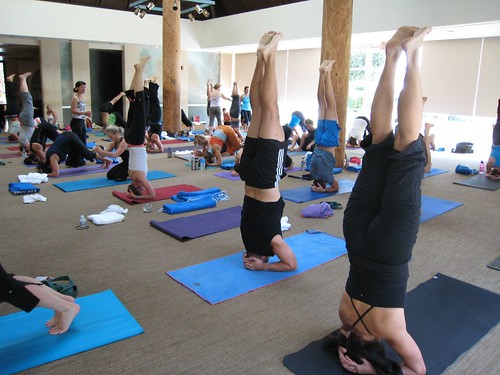
Headstand is different. Inversions terrify me (with the exception of shoulder stand, which I think I went into early enough in my practice that it didn't occur to me to be scared). Of course I can't do that, I tell myself. I'll fall and/or smash my head on the ground! Whenever headstand has come up in class, I've done the preparatory exercises, which were scary enough. Working with my fear in the preparatory poses was hard; it never occurred to me to actually try to kick up into the full pose.

Several weeks ago, I was practicing at home and I just kicked up into headstand at the wall. I have no idea what made me do it. There's no question that I had the ability to do this all along. I could tell that my alignment was good in the pose; my weight was in my arms, and I was comfortable there. All the fear just melted away, and since I've been able to continue working in the pose. It has done wonders for my self-confidence!

Bakasana is harder. I wonder if this is because my body has a painful memory to go along with the fear. I am just beginning to trust the strength of my arms again, my ability to know how the weight of my body should be distributed. It takes me a long time to find the courage, but I'm finally able to lift my feet off the ground again. I hope that one day I'll be able to straighten the arms.

I'm starting to recognize how often these two types of fear come up in other aspects of my life. Sometimes we're afraid that we'll fall (or fail) because of a previous experience; sometimes we're just afraid because of what lurks in our imagination. It's important to acknowledge that fear is a legitimate response to many things. After all, falling heavily on your head or neck is dangerous. Having your heart broken is devastating. Losing your job can put you in dire financial straits. The list goes on and on. But fear is so often paralyzing, and it can prevent us from experiencing our true potential, from continuing to learn and grow. We have to learn to assess our abilities and strength; to know when to go further; to have faith in our own resources and in those who support and encourage us; and to know what is and is not a serious consequence. Whether it's an inversion or love, the results of that trust can be exhilarating.

Let yourself take flight.

Namaste.

Monday, July 27, 2009

Tremendous confidence


Life has taken me away from this blog for a while - which overall is a very good thing, since life is much more important than blogging! What brings me back is a mantra I've been considering recently, something that one of my teachers says: Have tremendous confidence that you can. She usually says this right before we do something the mind warns is impossible, like standing on our heads. I love this mantra because often confidence (or lack thereof) is the only thing standing between me and what I want. I love it because the phrase tremendous confidence acknowledges how challenging it can be to believe, how much effort is needed to act on faith. I love it because I can feel the difference it makes in my body, in my mind, in my breath.

Recently, I viewed myself in a video from Jason Crandell's workshop at the Ojai Yoga Crib in 2007:


It's amazing to watch myself practice as I was two years ago. Almost from the beginning, I've loved Vrksasana (Tree Pose) and have felt at home in it. Ardha Chandrasana (Half Moon Pose) was a whole different story. Around the time of this video, I was referring to this pose as "my nemesis." The video features me falling in Ardha Chandrasana... on both sides. I'm struck by a couple of things when I see this video. First of all, by how different I now feel in my body when I do Ardha Chandrasana - sensations of ease, grace, lightness. And secondly, by the fact that in this video, it is visibly clear that I had learned to take myself into a posture in which I knew I would probably fall, to practice with joy in the face of great challenge. But I had not yet learned to have tremendous confidence that I could do the pose without falling, in spite of past history and rational or irrational fears.

I feel myself sometimes at this same crossroads in my life off the mat: willing to face challenge with a smile, but at the same time, lacking the confidence to just act without fear. In trying to break old patterns, whether it's falling in Ardha Chandrasana or holding your truth back in a relationship, sometimes you can spend too much time examining the pattern - and the more you look at it, the more it repeats itself. Sometimes the key might be to forget about the pattern, forget that you have ever been in a similar situation before, tap into that tremendous confidence, and step into the pose. With grace. And breath. Breath never hurts either.

When I see myself falling in 2007 and then feel myself lifting into Ardha Chandrasana in 2009, it gives me hope. Maybe the things that seem challenging now in my life will be second nature to me in two years. On second thoughts, I'll drop the "maybe." The things that seem challenging now in my life will be second nature to me in two years. I have tremendous confidence that I can.

Sunday, May 31, 2009

Letting go of the past

"Do not seek to have everything that happens as you wish, but wish for everything to happen as it actually does happen, and your life will be serene."
-- Epictetus


"
Our deepest fears are like dragons guarding our deepest treasure."
--Rainier Maria Rilke

This morning in class, we worked on Utthita Hasta Padangustasana (Extended Hang-to-Big-Toe Pose). I know the lovely lady on the Yoga Journal site has a big smile on her face, but this is one of those poses that pushes all my buttons and makes me lose my cool. Between sides, Nikole asked us to let go of our struggles on the first side and start the pose on the second side with a fresh and open mind. She said, "We spend so much time living in the past, don't we? Even the things we worry about happening in the future are just things that happened to us in the past. Just let it go."

Fear is a useful thing when you're being chased by a bear. It's much less so when you're trying to balance on one leg with your foot in the air or considering changing your job or moving to a new city. And there's a fine line between learning from past experience (arguably good) and assuming that because things did not go the best way possible last time you tried something that it will be so again in the future (arguably bad). The question is how to know when fear serves to protect us, and when it holds us back from reaching great treasures.

Friday, May 29, 2009

Making decisions

"Let yourself be silently drawn by the stronger pull of what you really love."
-- Rumi

So this theme has been recurring in my life about the decision-making process. It's an impossible process really; every issue has multiple sides and there's always so much unknown. In the end, there's nothing for it but to turn inward and see what is in the heart, to commit to a choice and the consequences of that choice, no matter what those may be.

I'm someone who could agonize over something as unimportant as a menu for hours if I thought people would put up with it. So often, when asked by my dining companions what I'm going to order I'll say, "I'll see what comes out of my mouth." It's not unusual that what I ask for in that moment is not at all the dish I thought I had decided on.

It's odd that a menu can cause me so much anguish, but at work on a daily basis I make quick, sometimes ruthless decisions without hardly a thought. That's not to say I take workplace decisions lightly, but I think that in that context so many of the contributing factors are simply ingrained; I have a wealth of experience that gives me a pretty good idea who these decisions are going to turn out. Add to that the fact that it is my job, my responsibility, to make these calls. People are relying on me. A similar force to that which makes me finally choose a dish from the menu when the server comes to the table, the need to follow procedure and hold up my end of the deal.

In this article from Seeker Magazine, Susan Kramer talks about the idea that yoga practice can help us become aware of tension in our bodies as we make a decision. Paying attention to the sensations in the torso can help you to become aware of when considering a course of action brings increased stress and when an alternative creates a sense of relaxation. In other words, the physical body may communicate to us when we are making a decision that goes against our instincts. It's good to have tools!

I think there is more to this than just tension in the body, but maybe I'm wrong. For me, the hardest decisions are those that could hurt other people and those which have a lot of unknown elements, as well as those where the results don't really matter (such as ordering a meal). That's probably pretty typical. Sometimes I can get paralyzed in these situations, completely bogged down in a state of inaction. All options generate tension. But yoga offers us a solution: get quiet, connect with the breath, turn inward... and then act. (Yes, Erich, I hear you. "Googling the Internet of Infinite Mind" again.)

I've said here before that I believe what happens on the mat is just practice for what happens off the mat, and this is another example. If you have a home practice and you create your own sequences, there's only one way to decide what pose to flow into next, how long to hold it, and what adjustments to make. You guessed it. Get quiet, connect with the breath, turn inward... and move. From the core, from the heart, from the energy within. I think any creative process is like this: music, writing, art. You might know a lot about the mechanics of yoga, music, writing or painting - but when it comes down to the art of it, decisions are not made with the head but rather with the heart, or maybe by a higher power. Sometimes it's as though the poems or music or asanas write themselves.

If you are not used to listening to your instincts, it can be difficult to trust yourself to make decisions from the heart. If your logical mind is arguing one way and your heart another, it takes a great deal of faith to go with your instincts. This reminds me of something I was told when I was about 15 (by a boy I had a crush on incidentally - you'll see why.) He said, "If you flip a coin and then do the opposite of what it tells you, you'll know that's what you really wanted to do all along."

Flip a coin. And then do what you really wanted to do all along. You know what that is.

Monday, May 25, 2009

Satya - To tell the whole truth and nothing but the truth

Recently, I've been thinking a lot about satya, or truthfulness, one of the five yamas (ethical restraints) proposed by Patanjali. The concept is deceptively simply - be truthful in your words and actions. But in reality, it is an extremely difficult precept to follow.

For one thing, satya comes into direct conflict with the restraint of ahimsa, or non-harming. The use of the word ahimsa is an interesting one. Yoga does not simply ask us to be kind to others, it asks us specifically to restrain from causing harm. That is a much broader and more difficult practice. When it comes to satya, the trick is to tell the truth without causing harm to others - or to ourselves. Another challenge is that satya includes not only our words, but also our actions. We must always act in such a way that our behavior expresses our true thoughts and intentions (and don't forget ahimsa.)

Perhaps the most difficult thing of all is the fact that so many of us spend so much time being dishonest with ourselves. It's very difficult to know if your words and actions are not truthful when you are not even consciously aware of your own truth, what you really think and feel in any given situation. For many of us, the fictional stories we tell ourselves about who we are and what we want have become such an integral part of the fabric of our being that we are unable to recognize the lies we tell on a daily basis. The tricky thing about truthfulness is that it refers to the absolute truth - so the embroidery and exaggeration that we may be used to using, all of the fish stories and half-truths and white lies that have become second nature to us - these too are not satya. Just because something closely resembles the truth does not make it true.

I admit it - lies perform some very important functions in my daily existence: creating my desired fictional sense of self, preventing hurt to myself and others, avoiding uncomfortable situations, etc. The thought of trying to unlearn these behaviors is pretty daunting. I'm relatively determined - but still, overwhelmed. For one thing, speaking the truth might mean that all of those lovely defense mechanisms would go away, leaving me vulnerable to those classic demons What Might Happen, and worse, What People Might Think. I'm a pretty private person (which you might not know from this blog, but blogging is not real life), and I'm also a little bit introverted by nature so the thought of speaking my truth on a daily basis is way up there with skydiving on my list of terrors. (I'm also pretty afraid of heights.) But I've done a pretty good job of doing things that terrify me, and I'm not totally ruling skydiving out of my future either. Speaking the truth to strangers is a pretty good practice.

An interesting system of speaking truthfully to others without causing harm is Marshall Rosenberg's Non-Violent Communication (NVC), which I think I've mentioned here before. I've dabbled in NVC and it's one of those practices that I believe in but have trouble implementing regularly in life. For one thing, it goes against our entire ingrained culture of expected communications. The idea is basically founded on the expression of universal and specific emotions which result from universal needs. It's a very non-judgmental way of communicating the truth without blame.

The tricky thing is that when the processes of lying, exaggeration, embellishment, and unauthentic action are ingrained, how do you become mindful of the process in order to stop it? I believe that some yogis will even take a vow of silence in order to facilitate the process of awareness of the thought patterns that lead to dishonest and/or harmful speech. Unfortunately my work will not exactly allow me to do this. I'm trying to just work with awareness, but it's a long slow process. I don't exactly have or easy answers on this one.

I'm half-Japanese and have a little Japanese cultural influence, and I think this is something that causes me particular challenges in this area. So much of Japanese culture is based on creating smooth and harmonious social relationships, and communication patterns tend to be very indirect. I've noticed that if someone asks me the right questions, I'm often able to speak truthfully, but if not, I have a tendency to leave the truth implied or completely unsaid. I've been accused of expecting others to read my mind, and there's probably some truth in that. I also sometimes act the way others want or expect me to, rather than in a truthful way. I've noticed that the result can be that my needs are not met in my relationships with the other people in my life or that the relationships are not completely authentic - and sometimes things build up to a point where the truth comes out suddenly in an unpleasant and hurtful way. I don't intend to mislead anyone ever; very often I am not even aware of the truth myself.

So this all sounds really awful - but it's honest. And don't get me wrong - I'm not beating myself up over it. I think it's a pretty common experience - and great practice. Adopting the practice of satya is like unravelling an enormous knot. Something that takes patience - but which I happen to be pretty good at. We'll see if the skill transfers. Like everything else, satya comes back to mindfulness, back to the breath, to the present moment, to tapping into instinct and figuring out what the truth even is.

Like living itself, satya takes a big dose of courage. I'm giving myself a big pat on the back for even trying. Maybe one of these lifetimes, I'll get it right.
Sunday, April 5, 2009

Bus meditations

I stubbornly continue to ride public transportation rather than buying a car. I am repeatedly told that it is not possible to survive in Southern California without a car. What people mean when they say this is: It's not easy to live in Southern California without a car. We are so used to hyperbole in our culture, so used to hearing anything that requires the slightest effort or patience referred to as impossible, we have begun to believe it.

It is ABSOLUTELY possibly to live in San Diego without a car. That's not to say it's easy, but I believe that we can only change the world through our own actions. We cannot be responsible for the actions of others, but by acting with integrity ourselves, we can inspire others to follow suit, we can create movements of many individuals acting with integrity. Peace is possible only through enough individuals acting peacefully. We cannot change someone into a peaceful person, we can only change ourselves. The April page of my 2009 Thich Nhat Hanh calendar bears this quote:
My actions are the ground on which I stand.

So I choose not to eat meat most of the time because I do not wish to support financially to the evils of the American meat industry, and I choose not to own a car largely because I see many benefits to choosing public transportation including:
  • Reduced cost to me
  • Reduced cost to the environment
  • Reduced traffic
  • More exercise (I walk a lot)
  • Controlled consumption (I think twice before going to the store and I only buy what I can carry)
  • Opportunities to engage with the realities of my community, to practice yoga on a daily basis out in the world

To be completely honest, there are other factors which speak less to my good moral character such as the fact that I am totally intimidated by the whole car shopping experience.

Call me crazy, but I am getting along fine without a car. Given, the public transportation system in San Diego is appalling and getting worse, carrying on a fine California tradition of overreliance on private motor vehicles. However, if everyone keeps driving cars rather than riding transit, there will be no motivation to change the system - so I have persisted over nearly five years. It does limit where I can live and where I can shop, but not necessarily in a bad way. There are a few things that I regret not being able to do, but every few months I rent a car and take care of a lot of these chores. I rely on friends for rides and sometimes I feel guilty about that.

Anyway, I wanted to address my last point in the above list (opportunities to engage with the realities of my community, to practice yoga on a daily basis out in the world) because I think it's an aspect of riding public transportation which is not usually discussed. A friend recently reminded me about the red light meditation, which got me thinking about bus meditations. For example:

  • The waiting for the bus meditation - see the red light meditation (link above). Unlike the red light meditation, though, the waiting for the bus meditation is tricky because it can go on for a pretty long time and you never know when the bus is going to arrive. By nature, monkey mind wants to go back to thoughts of When is the bus coming? Where is the bus? Why is it late? I'm so hot/ cold/ tired/ bored. My feet hurt. etc. What a gift, to have a built-in exercise of bringing yourself back to the body, the breath, the present moment. (By the way, when will the bus come? When you are ready for it!) I also like to do tadasana and pranayama at the bus stop.


  • Slowing down - In our world, we are always going, going, going nowhere fast. What a gift, to have pauses built into your day! When you are waiting for a bus, there is nothing to do that will make the bus come faster. There is nothing to do but exist at the bus stop. When you are on the bus, there is nothing you can do to arrive at your destination faster. (By the way, there is really nothing you can do when you're driving either - but people usually try and it's usually dangerous!) So you can experience complete freedom to allow things to unfold as they must and there is this amazing opportunity to just sit, open the heart, slow the mind, focus on the breath. You also have an opportunity to just experience how you are feeling going into your day, or in the evening, how your day has affected you. So often we don't give ourselves a chance to connect.


  • Loving kindness meditation and/or compassion - On public transportation, you are in the midst of humanity. You see a lot of suffering. People cry on the bus - I have cried on the bus. People laugh, people sleep, people stare blankly out the window. People hobble in physical pain, they are destitute, they are ill, they are drunk or high. People suffer from mental illness, and people are angry, with or without good reason. People criticize strangers. People are selfish and they are generous. People express sympathy, they reach out to help others for no particular reason other than that it is right. Sometimes, particularly if one is fortunate, there is a tendancy to isolate oneself from those who are less fortunate, from how things are in the world. (Is this, in fact, the reason why many people are so glued to their cars? Avoidance?) On the bus, you see it all. Sometimes, it is all I can do to open my heart to it all and keep breathing. What better place to experience the same-ness of all people, to practice loving the world?

Leave the car at home. What practices do you come up with? Ride the bus. Open your heart.

Wednesday, March 11, 2009

Set Yourself Free: Letting Go of Perfection

"It is good to remember that one of our goals in life is to not be perfect. We often lose track of this aspiration. When we make mistakes, we think that we are failing or not measuring up. But if life is about experimenting, experiencing, and learning, then to be imperfect is a prerequisite. Life becomes much more interesting once we let go of our quest for perfection and aspire for imperfection instead.

This doesn’t mean that we don’t strive to be our best. We simply accept that there is no such thing as perfection—especially in life. All living things are in a ceaseless state of movement. Even as you read this, your hair is growing, your cells are dying and being reborn, and your blood is moving through your veins. Your life changes more than it stays the same. Perfection may happen in a moment, but it will not last because it is an impermanent state. Trying to hold on to perfection or forcing it to happen causes frustration and unhappiness.

In spite of this, many of us are in the habit of trying to be perfect. One way to nudge ourselves out of this tendency is to look at our lives and notice that no one is judging us to see whether or not we are perfect. Sometimes, perfectionism is a holdover from our childhood—an ideal we inherited from a demanding parent. We are adults now, and we can choose to let go of the need to perform for someone else’s approval. Similarly, we can choose to experience the universe as a loving place where we are free to be imperfect. Once we realize this, we can begin to take ourselves less seriously and have more fun. Imperfection is inherent to being human. By embracing your imperfections, you embrace yourself."

From http://www.dailyom.com/articles/2009/17597.html - March 11, 2009

Saturday, February 21, 2009

Staying Grounded

Here is the Daily Om again from February 13. (Sometimes I send these things to myself and then forget about them for a few days until they surface again in my inbox, delicious!)

STAYING CONSCIOUS
Staying Grounded in a Big City or Busy World

1. Live simply and live deliberately. By choosing not to get caught up in the details of this fast-paced world, you are doing your part to slow down. You will also discover that you have more time to enjoy being alive.

2. Stay in touch with yourself. Soul searching, meditation, and journaling are just a few of the many activities you can take part in to stay aware and learn as much as you can about your emotions, reactions, likes, dislikes, dreams, and fears. Having a solid sense of self gives you a firm foundation for living in this world.

3. Support or teach others as often as you can. This can help you form connections with people while also giving you an opportunity to make the world a better place.

4. Consciously choose what you will allow into your being. The media bombards us
with visions of hate, war, and pain. Be judicious about what you read, watch, and listen to.

5. Acknowledge the beauty that resides around you. Whether you live in a sprawling metropolis or a stereotypical suburb, there are natural and man-made wonders just waiting to be discovered by you.

6. Nurture your ties to your tribe. If you don’t have one, create a community that you can belong to. Modern life can be isolating. When you have a tribe, you have a circle that you are a part of. Its members – loved ones, friends, or neighbors - can be a source of support, caring, guidance, and companionship.

7. See the larger picture. Remember that the way that you choose to live is not the only way to live. Widen your perspective by exploring other modes of being through research, travel, and discussion.

8. Embrace the challenges that life presents to you, and challenge yourself often. After a time, even the most exciting jobs or lifestyles can seem routine. Never stop assimilating new knowledge about whatever you are doing, and your life will never seem dull.

9. Move your body. In this busy world, it can be easy to live a sedentary life. Movement reacquaints us with our bodies and connects us to the earth in a visceral way. It also restores our vitality.

10. Make time for stillness, silence, and solitude. The world can be noisy, and we are subject to all kinds of noises nearly every waking hour. We are also often "on the go" and unable to relax. Being alone in a peaceful place and making time for quiet can help you stay in touch with yourself.

I came back from my last trip a month ago feeling incredibly grounded, but it didn't take long for me to start feeling disconnected and uneasy again. I have lived in the city for years now and I kind of like it ~ until I spend some time away and I realize how insane the pace is. These ideas for staying grounded are important. The blog helps. The yoga practice helps. The meditation helps.

But somehow, so often, I feel that most of the day passes me by, in a blur. I like living in the city, or at least I have come to like it. But recently I feel like the city might be stealing my soul. It doesn't help that most of my tribe has departed in the past couple of years. Perhaps it is time for me too to depart, to seek new surroundings. But this too, I want to do slowly and deliberately and right.

I don't have any answers, not today, just many questions. And a list of practices that could be helpful, if I can find the dedication to follow them.