Showing posts with label healing. Show all posts

Tuesday, March 22, 2011

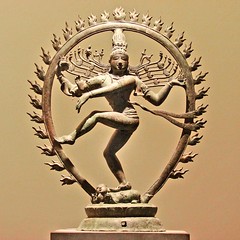
OK, Rumi, let's dance.

Photo Credit: Jean-Pierre Dalbera/ Flickr Creative Commons
We're fools whether we dance or not, so we might as well dance.
~Japanese proverb

Let the beauty you love be what you do. There are a thousand ways to kneel and kiss the earth.
~ Rumi

Nathan over at Dangerous Harvests just made his second anniversary post. Happy blogiversary, Nathan! To celebrate, he posted his first post from the blog. It isn't my anniversary, but I thought I'd go back and look at my first post anyway. Here's a piece of it (from November 2, 2008):
If yogis discovered the secret of happiness thousands of years ago, why do we now still live in a culture of so much suffering?! And to put it more personally, since this is to be my personal journey, why do I still suffer so much? Why do I forget to practice in my daily life, when I know that it will not only make me happier and healthier, but also decrease suffering in the lives of those around me?

In June, I started a Masters in International Education at the SIT Graduate Institute in Vermont. I chose the school because I believe the SIT philosophy is highly compatible with my attempts to increase the practice of yoga in my daily life. In formulating my learning plan, I stated as my second learning objective "Explore ways to bring my career into harmony with my yoga practice." In fact, this is one of the key reasons why I am doing this degree - to give myself the training and the tools to adjust my working life to facilitate my practice - and yes, cheesy cheesy, to do more good in the world.

It's interesting to look back on because I don't feel that way any more. It's not that I don't suffer, but that the quality of my suffering has changed. Back then, I was suffering in the dark. Now, I feel like I can at least suffer with the light on. I have a consistent daily practice, not only of yoga and meditation on the mat or cushion, but also taking these practices into my life and applying them to running, eating, working, and personal relationships. Through this, I've not only physically transformed but I've begun to shine the flashlight of mindfulness into all sorts of dark corners.

In the beginning, this blog was about bringing my career into alignment with my yoga practice. I had forgotten that. Back then, I was working a challenging administrative job and struggling to practice yoga in the workplace. I was reluctant to admit that I was struggling so much because it wasn't the right place for me to be. It was a job that worked with my strengths and which brought out all the worst in me, too. I suffered in many ways at that time: emotionally, physically, mentally, spiritually. The suffering had to get really bad before I was really willing to look at the forces that were holding me there and ask myself: Why? Why fight? Why not just let go?


I was clearly looking for the light switch, even then. I'd started my Masters program because I was already seeking. I wrote those things in my learning plan and started this blog for a good reason. I've even had a Rumi quote up on my computer sidebar, probably since before I started this blog: Let the beauty you love be what you do. It took me all this time to really see it, to look Rumi in the eyes and reply, Yes. OK. I know why you are here. Let's dance.

When I started shining that flashlight around, mostly what I saw was fear. When I looked more closely, I realized that fear is always worse than the thing I fear.  I know this is not a new concept, but the more I sit on my cushion in silence with my eyes closed, the more I have to make friends with it. I began to wonder if I ever had any other motivation for action in my life besides avoiding fear. I began to wonder what would happen if I did something for love. Would the world end? Would the boogieman in the corner come out and get me? Did it matter?

There's never any map for these journeys we take, or rather, I'd say there are many maps - the experiences of others who have taken their own journeys and lived to tell the tale - but they're cryptic and incomplete, and sometimes we flat out refuse to believe that they could really be telling us to leap off that cliff into the darkness. Over the past three years, I've been evolving. I feel like the same person, but when I look back to that first post, I know I am not. I'm teaching at Community College now, and it's scary and difficult and fulfilling. I just started Yoga Teacher Training this past weekend. I'm finally ready to take the necessary risks in order to make sure all the pieces of my life really fit. I've learned to feel gratitude for the fear and suffering, because I've realized that they were the map and directions. They were the flashlight. I'm ready, finally, to really love what I do.


Thursday, February 10, 2011

Chain reaction: Continuing to focus back

Photo credit: Soham Basoham (soham_pablo/ Flickr Creative Commons)
I have a confession to make.  For the first time in my life, I've had terrible back pain since some time last month. As a yogi, I couldn't help thinking This shouldn't be happening to me. I kept hoping it would just stop, but it didn't. In fact, as you might have guessed, it got worse until it was really affecting my quality of life and severely impeding my ability to sit in meditation. I couldn't figure out what was triggering it. I'd been traveling a lot during December and the first part of January, and the pain started some time after I returned home. I feared it was my return to running after taking some time off, or maybe it was my bed? I did more yoga, hoping I could work out the kinks, but my back continued to get worse. I deepened my inquiry into the back body. And then, I wrote my last blog post.

After reading my post, Kit Spahr, who blogs at Sometimes It's Art, wrote to tell me she's been engaged in a similar exploration of the back body. She turned me on to this post by Katy Bowman. I tried the suggested exercise and discovered, of course, that I'm a rib thruster. Katy provides some useful tips for correcting this alignment problem, and I started to consider these.

Then I started catching up on my Yoga Journals that had come around the holidays when I'd been too busy to read them. In the December 2010 magazine, the Anatomy column is by Roger Cole and is called "Easy Seat" (unfortunately not available online, but if you have the magazine, it starts on pg. 75). Cole talks about contracting the lower erector spinae muscles to correct misalignment and eliminate back pain in Baddha Konasana (Bound Angle Pose). When I read it, I had a sudden realization. Far from keeping my back healthy, my yoga was causing my back pain - and it had been exacerbated to its current level by poor alignment in seated meditation during my Commit to Sit program.

The next time I sat, I was able to follow the whole chain reaction in my spine. My hamstrings are tight from running, so it's hard for me to achieve the correct pelvic position in a crosslegged seated position (the top of my pelvis is tilted back). I've been adjusting for this by sitting up on blankets or a meditation cushion, which allows me me to tilt my pelvic into a neutral position, but it takes effort to hold it there so as I focus on relaxation or on the breath, I tend to slip and round the lower back again.

Very often in yoga class, an instruction is given in a crosslegged seated pose to "roll the shoulders up, back, and down." When I was less flexible in the upper body, this had the intended result of opening my chest and relaxing the shoulders down, but as my chest, back and shoulders became more flexible and my shoulder blades became more mobile, I began performing this action by thrusting my thoracic spine far forward and pushing the shoulder blades deep into the back.

Another common instruction is to "lift the chest/ sternum" (I mentioned this in my last post), which I achieved by thrusting my ribs forward. Add this to my sometimes rounded lumbar spine, and I've been putting a huge amount of stress on my thoracic spine to curve in ways it was never meant to. (Cole's article is really excellent and has a helpful way to explore the curves of the spine and the use of the erector spinae muscles using cat/ cow which I highly recommend.)

One way I can tell when I'm doing this is that belly breathing is difficult, even painful. For years, I've been having occasional difficulty with the three-part yogic breath; I now realize it is often hard when sitting but always easy when lying on my back. I'm not sure of the anatomical explanation for this, but sitting the way I have been (slightly rounding my lumbar spine and pushing the thoracic spine forward to compensate while thrusting the lower ribs out), breathing into the belly is painful. When I contract the muscles along the lumbar spine and pull my lower ribs back while focusing on flattening my shoulder blades onto the back instead of thrusting them into the back, I can suddenly breathe into the belly with ease.

Another instruction I've misunderstood is one often given in seated forward bends: lead with your chest. The idea of this instruction is to have students bend at the hips instead of rounding the spine to get further down. However, because I don't have the mobility in my pelvis but I do have a lot of flexibility in my upper back, I realize that I've been backbending in my forward bends, thrusting the chest way out and the ribs way forward. Focusing on keeping the lower ribs in as Cole describes in his article allows me to work on bending forward from the pelvis instead of pushing the chest forward.

I guess part of the problem is that instructions that were appropriate for me as an asana beginner became harmful to me as I developed more flexibility in my upper body while remaining relatively tight in my lower body. I had a complete misunderstanding of how good spinal alignment should feel in my body and had no idea that I was having any of these problems until my back started hurting. Now that I've recognized the problem, I can begin working to correct it but my muscles need to get used to working in these new ways and I get tired easily. My back is improving - but slowly. In the meantime, seated meditation is painful - unless I sit in Virasana, elevated on a block or cushion to protect my knees, in which case I can easily achieve the appropriate alignment of my pelvis (and therefore my back) and alleviate pain.

If you're a yoga teacher, do you give these types of instructions to your students? It might be useful to find out if any of them are having midback pain or struggling with belly breathing, and to explore whether this is a cause. Perhaps meditators with midback pain could benefit from the suggestion to try (modified) Virasana for meditation, as well as working on flexibility in the hamstrings and working with the alignment of the pelvis and thoracic spine. If anyone out there is having similar problems, I hope this helps you with your own exploration.

Saturday, February 5, 2011

Everything has another side

Me, as seen from the back
In truth, it matters less what we do in practice than how we do it and why we do it. The same posture, the same sequence, the same meditation with a different intention takes on an entirely new meaning and will have entirely different outcomes 
~ Donna Farhi


In October, I took a workshop at the Ojai Yoga Crib with Laura Tyree. First of all, if you can get to the Crib, go. It has changed my life and continues to do so every year that I attend. (I think it's been six years now.) For that matter, if you get a chance to practice with Laura, do. Her wisdom and compassion (not to mention her beautiful voice!) will take you somewhere deep inside yourself - and wherever that place is, it is where you need to be.

In the workshop I took last October, Laura talked about how issues with her heart led her to explore her downward facing dog and consider how achieving a backbend in that pose was putting pressure on the heart. In many of the popular hatha yoga styles here, we do a lot of downward dogs, so this is a much repeated problem for many practitioners. As we get more flexible, this causes us to sway our backs in the pose, creating this backbend. She showed us how she was exploring a lift through the back between the shoulder blades. We practiced with a partner, having the partner place her hand on our backs so we could feel where the lift was happening.

When my partner put her hand on my back, I knew that I would always be able to find the right place to lift because it was in the exact location where I've had chronic back pain for years - upper mid-back, right between the shoulder blades. In that moment, I realized I had better pay more attention to my down dogs. Over the past few months, that realization has broadened into another: I had forgotten about my back entirely!

I love bhakti yoga and huge back bends and opening my heart to the sky with absolute abandon. However, I have very tight hamstrings from years of running and I do not love forward bends quite so much. I'm not tortured by them as much as I used to be, but when I do them, I'm usually focused on what my front body is doing. (And probably trying to make the pain in my back body go away by ignoring it. In case you didn't know, this doesn't work.) Now, I am reminded that there are at least two sides to every issue - even me!

I've started focusing on my back body all the time, not just in downward facing dog. I've been doing chakra meditation on the back body instead of the front. (So often teachers neglect to describe the chakra locations in terms of the back body, so I suspect I'm not the only one who has this problem.) I've discovered that pain relief often comes from directing my breath there. I've discovered that I can breathe into my kidneys as well as my belly, and into the space between my shoulder blades as well as my chest. I've discovered that this adds support, both in seated meditation and asana, and sometimes results in shifts in postures that feel really good and even relieve pain. I'm starting to feel how my lumbar spine (lower back) is overextending to compensate for the way I'm drawing my thoracic spine inward to get that exalted open-hearted feeling. Opening my heart center forward is killing my back - who knew?

Yesterday, I was looking for something entirely different in Judith Lasater's Yoga Body book, and I came across the following passage:
"One of the unfortunate actions that sometimes happens in asana practice is an over-flattening of the natural kyphosis [normal curvature of the spine]. Students are sometimes taught to lift the sternum with the intention of opening the chest, and they do so by bringing their thoracic spine into the body, thus flattening the curve. After years of practice, the spine loses some of its natural curve."
Bingo - that's me. The book suggests standing on a yoga mat near a doorway and holding onto the doorway with your arms at chest level and hands crossed at the wrist. Then you walk backward slowly and round the thoracic spine upward while moving the shoulder blades apart and dropping your head between your arms, allowing some of the muscle tension in this area to be stretched and loosened. I will certainly be trying this in the future, and paying a lot more attention to how I support backbends with the breath from the back side of the body - not to mention focusing on how I may be collapsing here in forward bends and all sorts of other issues I've never considered before.

If I wanted to get philosophical here, I could explore the idea that the back represents my past, or talk about the side of anything that lies in shadow... but for once, I want to stay on the mat with this one. When I'm on the mat, I'm on the mat - both the front and the back sides of me. The more I practice asana, the more I realize there's always something I've forgotten to be present with in the pose; there's always a part of the body I've given preference to and another that's been lost from my conscious awareness. But the body has its own intelligence and if we know how to listen, it will let us know what has been forgotten. One thing is for sure: in the future, I'll be thinking a lot more about what those chronic achy bits are trying to tell me.

Friday, January 28, 2011

The best time to practice is right now

Yoga is the perfect opportunity to be curious about who you are. ~ Jason Crandell

For those wounded by civilization, yoga is the most healing salve. ~ Terri Guillemets

The deeper I go into practice, the more I become aware of how complicated I make life sometimes. There are all these layers of the mind that peel away. It reminds me of the way the experience of the asanas changes on a physical level. For the first few dozen or even hundred downward facing dogs, the experience is pretty much holding your breath and looking forward to coming down. And then suddenly, one day you actually feel what it means to inwardly rotate the thighs and spread the hip bones and all this space opens up in the pose. And it will change your world, that feeling. See if it doesn't.

Like this, too, in the mind. At first, learning to breathe through and experience difficult emotions without acting, I thought I was learning to deal with the present. (Side note: when I say that it sounds as if I have already learned to breathe through and experience difficult emotions without acting. I can assure you, I haven't. That's why they call it "practice.") Anyhow, I'm starting to realize that a strong emotional reaction is almost never about the present. It's a sure sign that I'm holding a past wound up as evidence in a present situation - probably holding it against someone who had nothing to do with the original pain in the first place. Take a close look and see if this isn't true. And it will change your world, that understanding.

I started this post out thinking that I was going to write about breathing through reactions in the present and then boom! Insight. Look out - you never know when it's coming. Originally, I was going to explore my reaction to a harassing comment left here, but now I see I don't have to. That comment, in the present, means nothing. Who knows why people do these things? His problem is not my problem. The pain and uncertainty and anger it triggered - that's old stuff, really old stuff. And the illusion of ego. Right now, in the present, there's just clarity and a sense of compassion.

The content of this post may have evolved, but I can keep the title because the time is now. Peel away all those layers of history, and inside is the jewel. It is all these illusions that are complicated. The present is incredibly simple. I wonder what is behind the next layer?

Thursday, September 3, 2009

All phenomena proceed from the mind

I'm currently reading The Joy of Living: Unlocking the Secret and Science of Happiness by Yongey Mingyur Rinpoche. (Thanks Stephanie. xx)

Here is a video of Mingyur Rinpoche teaching. The analogy of the watch is one he talks about in the book.


Today I was struck by his description of one of the Buddha's teachings. In it, a young man comes to a great master seeking a profound teaching. The master agrees to share one - after the young man has a cup of tea. As he's about to drink, the tea transforms into a beautiful lake. The young man stands looking at the lake, and a girl appears. They fall in love at first sight and he goes home with her. Her parents also like him, and the two get married and have two children.

In his teens, their son falls ill and dies, and their daughter is killed by a tiger shortly thereafter. Overcome with grief, the man's wife drowns herself in the lake. Her mourning parents stop eating and starve to death. Having lost everything, the young man goes to the lake to drown himself. As he's about to throw himself in, he suddenly finds himself back in the master's house, holding the cup of tea.

Though he had lived an entire lifetime, harly an instant had passed; the cup was still warm in his hands and the tea was still hot.

He looked across the table at the teacher, who nodded, saying, "Now you see. All phenomena proceed from the mind, which is emptiness. They do not truly exist except in the mind, but they are not nothingness. There is your profound teaching."

As I read the teacher's words, I felt a kind of liberation as a whole lot of fear fell away. I'm still not entirely sure that I know why, but as someone who has despaired after loss, this story gave me an incredible feeling of space and hope. Doesn't this story speak to something we all fear - losing everyone we love? This unspeakable pain... it is definitely not nothingness. But our experience of it arises in the mind, sinks back into the mind. And most dangerous of all is the fear of pain that has not happened. Sometimes we make that into something so solid, so real.

All phenomena proceed from the mind, which is emptiness.

Meditation teachers often use the analogy of the mind as the sky, and thoughts as clouds that arise from it and pass through it but are not permanent. (I've also heard the analogy of leaves on a stream, and I particularly like the sense of movement I get from that image.) You can sit and watch those thoughts arise, drift across your mind, and float away without attaching to them. Sit and watch the fear of incredible loss with identifying with it.


All phenomena proceed from the mind, which is emptiness.
Happiness is our birthright.
We all have monkey mind. Watch it chatter. Let it go on and on.
Let the big sky of the Self be still.

Saturday, May 2, 2009

Words to live by

In October, at the end of a 6+ year relationship, I knew there were things I had to remember if I was to survive. I wrote them on blue Post-Its and stuck them all over my apartment. I have since taken many of them down, but two remain. When I put them up, they were just words - but I knew they were the keys to recovery and that I would need to believe them and live them in order to find meaning in life again. After seven months of looking at them every day, I know they are the reasons why I am filled with peace and joy on this Saturday morning.

This one is by my front door. I look at it every time I leave or come home. It's also in front of the only space big enough to do yoga in my apartment.


This one is in the kitchen.


Trust and celebrate. These are the words that help me through. (These, and Stephanie's email on my kitchen cupboard with Rilke's quote: "For all that is unresolved, try to love the questions themselves." Stephanie, your emails and blog have kept me going through some dark days. I am so blessed to know you. Namaste.)

Monday, April 13, 2009

Healing Those Who Are Broken

At the conclusion of this evening's yoga class, my teacher Joshua Graner told us that he has been doing some work with the US military teaching yoga to veterans and soldiers with PTSD. Problems with PTSD and other disorders have reached crisis levels, and the military, not knowing what else to do, is paying for clinical studies using yoga, acupuncture and other treatments from Eastern medical traditions. Click here for a recent article on the subject. While the writer is skeptical about some of the treatments the military is trying (I'm trying not to be offended by his use of the term "wild-sounding" to refer to some of the techniques authorized), he does support yoga for vets. Click here for a Yoga Journal article on yoga as treatment for PTSD. Joshua is a great person to be doing this work. Not only is he an amazing teacher and healer, but he started his career as an army medic. I'm excited to see the military taking these steps to find healing for those who have been traumatized by battle - maybe some day we will actually be teaching peace, love, and mindfulness to prevent war itself.